In summary:
- The durability of kids’ trousers depends on material science and construction, not the price tag.
- Look for heavyweight fabrics like 12oz+ denim or Cordura and inspect for structural reinforcements like triple-stitching and gussets.
- Proactive repairs and correct hemming can dramatically extend the life of any pair of pants.
- Implementing a clothing lifecycle system turns worn-out school pants into valuable play clothes.
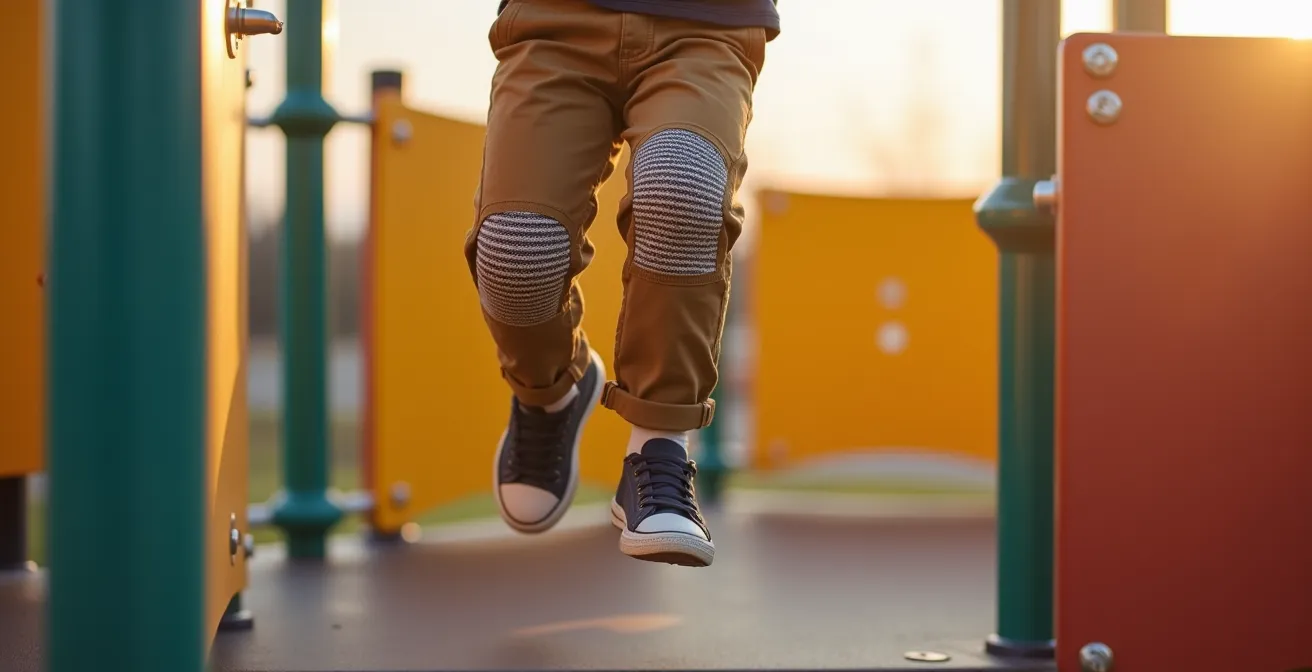
The cycle is as frustrating as it is familiar: you buy a new pair of trousers for your child, and within a few weeks, a familiar hole appears at the knee. The playground, with its slides, gravel, and climbing frames, is an unforgiving testing ground for children’s clothing. Many parents resort to buying cheaper, disposable options or simply tell their kids to “be more careful”—a strategy doomed to fail. The common advice to just patch the holes or buy from “good brands” barely scratches the surface of the problem.
But what if the solution wasn’t about spending more or limiting play, but about thinking differently? As a technical clothing designer, I see children’s trousers not as fashion items, but as gear that must perform under stress. The key to ending the cycle of ripped pants lies in understanding the principles of material science and structural engineering that go into high-performance apparel. It’s about learning to identify the specific fabrics, stitching techniques, and design features that are engineered to withstand the daily abuse of active play.
This guide will equip you with a designer’s eye. We will deconstruct what makes a pair of trousers truly durable, moving beyond brand labels to focus on tangible qualities. You’ll learn why certain materials fail while others endure, how to apply repairs that last, and how to inspect a garment for the hidden markers of quality that signal it’s built for the long haul. It’s time to stop replacing and start investing in clothing that can keep up with your child’s adventures.
To help you navigate these technical details, this article breaks down the essential knowledge into clear, actionable sections. The following summary outlines the key areas we will cover, from material choice to smart repair techniques.
Summary: How to Find Jeans That Are Tough Enough for Climbing Trees?
- Why Cordura Patches Outlast Denim by 300%?
- How to Apply Iron-On Patches That Actually Stay On?
- Double Knee vs. Single Layer: Is the Extra Bulk Worth It?
- The “Too Long” Mistake That Causes Hems to Fray Prematurely
- When to Downgrade: Turning School Pants into Garden Play Clothes
- Why 12oz Denim Survives the Slide While 8oz Tears?
- Playground vs. Forest: Which Environment Develops Better Balance?
- How to Find Jeans That Are Tough Enough for Climbing Trees?
Why Cordura Patches Outlast Denim by 300%?
When it comes to high-abrasion areas like knees, not all fabrics are created equal. While standard denim is a common choice, it’s primarily a cotton twill designed for everyday wear, not for withstanding repeated friction against concrete or gravel. This is where technical fabrics, engineered specifically for durability, make a significant difference. Cordura, a high-performance nylon-based fabric, is a prime example. Originally developed for military gear, its unique fiber structure provides exceptional resistance to tears, scuffs, and abrasion.
The performance gap is not minor. In standardized wear tests, reinforced patches have demonstrated a remarkable ability to extend a garment’s lifespan. Some tests show that properly applied technical patches mean trousers can last significantly longer; one study found reinforced patches can extend trouser life by 4x compared to unreinforced pants. This isn’t just about patching a hole after it appears; it’s about proactively armouring the key failure points of the garment before they can fail. Other robust options include heavyweight canvas, which is also a dense, plain-weave cotton fabric known for its strength in workwear.
To make an informed choice, it’s helpful to understand the trade-offs between different materials. The following table, based on an analysis of durable fabrics, breaks down the characteristics of common choices for reinforcement.
| Fabric Type | Weight | Durability | Best Use |
|---|---|---|---|
| 8oz Denim | Light | Low – tears easily | Light activity |
| 12oz+ Denim | Heavy | High – resists tearing | Active play, slides |
| Canvas/Cordura | Heavy | Very High | Extreme conditions |
| Ripstop Fabric | Medium | High – prevents tear spread | Forest, thorny areas |
Ultimately, selecting a material like Cordura or heavy canvas for patches isn’t just a repair—it’s an upgrade. You are fundamentally changing the performance characteristics of the trousers, transforming a weak point into a bastion of strength that can handle the rigours of the playground.
How to Apply Iron-On Patches That Actually Stay On?
An iron-on patch that peels off after a single wash is more frustrating than the original hole. The common failure of these patches isn’t usually due to the patch itself, but to improper application. From a technical standpoint, adhesion is a chemical and mechanical process. To create a bond that withstands the flexing, stretching, and laundering that kids’ clothes endure, surface preparation and technique are everything.
The most frequent mistake is neglecting to prepare the garment. Fabric softeners and dryer sheets leave behind a waxy, invisible residue that repels adhesives. A thorough wash without these agents is a non-negotiable first step. Another critical but often overlooked detail is the shape of the patch. A patch with sharp 90-degree corners has four distinct points of weakness. These corners are easily caught and lifted during activity or in the wash, leading to peeling. By simply rounding the corners with scissors, you create a smooth, continuous edge with no obvious point of failure, dramatically increasing the patch’s longevity.
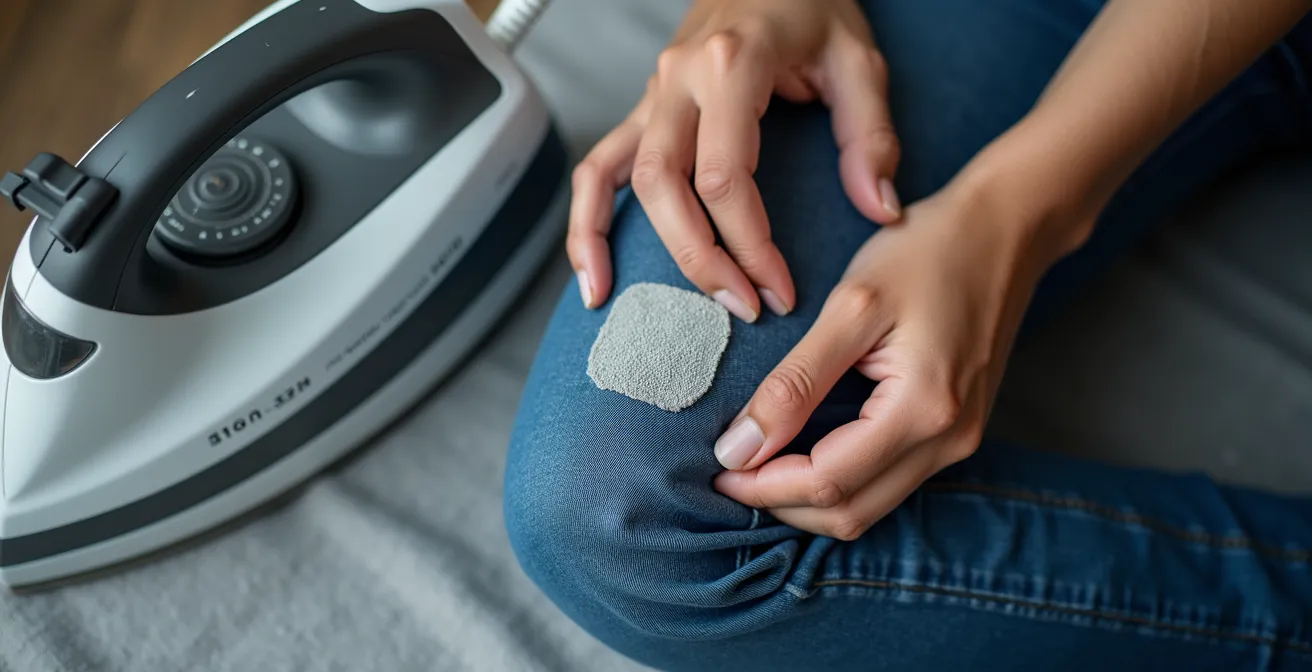
As the image illustrates, precision during application is key. The goal is to create a permanent bond between the patch’s adhesive and the fabric’s fibres. This requires the right combination of heat, pressure, and time, followed by a complete cooling period to allow the adhesive to set fully. Moving the garment while it’s still warm is a primary cause of a weak bond and subsequent peeling.
Your Action Plan: Applying Patches for Maximum Adhesion
- Prepare the Surface: Wash the garment without any fabric softener to remove residues that prevent the adhesive from bonding.
- Size and Shape: Cut patches to be slightly larger than the hole and, most importantly, round off all corners with scissors to prevent peeling.
- Boost the Bond: For extra security, consider using fabric fusing tape, cut slightly larger than the patch, to ensure complete adhesion across the entire surface.
- Apply Heat Correctly: Follow the manufacturer’s instructions, typically applying firm pressure with a hot iron for 30-45 seconds. Ensure heat is distributed evenly.
- Cool Completely: Let the garment cool down on a flat surface without moving it. This step is critical for the adhesive to cure and form a permanent bond.
Double Knee vs. Single Layer: Is the Extra Bulk Worth It?
The concept of “double knee” trousers, where a second layer of fabric is stitched over the knee area, is a classic feature in workwear for a reason: it works. But is the added bulk and potential stiffness a worthwhile trade-off for children’s clothing? From a design perspective, the answer is an unequivocal yes, provided it’s done correctly. The second layer acts as a sacrificial shield, absorbing the vast majority of abrasion and impact, thereby protecting the primary structural layer of the trousers.
The extra bulk is often misunderstood. In well-designed trousers, the reinforcement panel doesn’t have to be stiff or uncomfortable. The key is in the material choice and application. Instead of simply slapping a heavy patch on the outside, a more elegant solution is to add a reinforcement layer on the *inside* of the trousers before they are ever worn. This method, often used by savvy parents and small-scale manufacturers, provides the same durability benefits without altering the external appearance or creating a stiff, bulky feel. A parent who used this method found it to be a game-changer: by ironing 5×5 inch squares of fusible fleece or featherweight interfacing inside the knees of new pants, all pairs survived an entire school term without a single rip, even with very active kids.
This internal reinforcement is invisible from the outside and, when using a soft material like fleece, adds virtually no discernible stiffness or discomfort. It effectively creates a double-knee garment without the traditional workwear aesthetic. This proactive approach treats the garment as a system to be optimized, rather than an item to be repaired reactively. For children who are particularly sensitive to textures, using a soft internal patch combined with the standard outer fabric provides the perfect balance of durability and comfort.
The “Too Long” Mistake That Causes Hems to Fray Prematurely
While knees are the most obvious failure point on kids’ trousers, the hems are a close second. Frayed, shredded hems not only look untidy but also represent a fundamental and preventable design flaw in how a garment is worn: they are simply too long. When a trouser leg is even a centimetre too long, the back edge gets trapped under the child’s heel with every single step. This creates a powerful grinding action, effectively “sanding” the fabric between the hard sole of the shoe and the unforgiving pavement.
This mechanical wear is relentless and quickly destroys the fabric fibres. As one DIY clothing expert eloquently puts it:
The back of an overly long trouser hem is ground between the child’s heel and the hard pavement with every step, effectively sanding the fabric down until it shreds.
– DIY Clothing Expert, Common Hemming Mistakes Guide
Fixing this issue requires a proactive approach to fit and reinforcement. The first step is ensuring the trousers are the correct length from the day of purchase—the hem should hover just above the ground when the child is standing straight in shoes. For trousers that are intentionally bought a size up to allow for growth, cuffing is not just an aesthetic choice but a crucial protective measure. Creating a tight, secure cuff or a “pinroll” lifts the raw edge of the hem away from the high-wear zone at the heel.
For school trousers or other garments where a visible cuff is undesirable, an invisible reinforcement called “kick tape” is the professional’s solution. This is a durable, woven tape that is ironed or stitched onto the inside of the hem, creating a tough barrier that takes the brunt of the friction. This small, inexpensive addition can double the life of a trouser hem. Key strategies include:
- Check Hem Length: Ensure trousers do not drag on the ground when the child walks.
- Apply Kick Tape: Iron or sew hem tape on the inside bottom edge of trousers for an invisible, durable barrier.
- Master the Pinroll: For casual pants, a tight cuff protects the raw hem edges from heel friction.
- Inspect Regularly: Check hems weekly for the first signs of fraying and intervene immediately.
When to Downgrade: Turning School Pants into Garden Play Clothes
Not every pair of trousers needs to be in pristine condition. A key part of extending the life of a child’s wardrobe is not just preventing damage, but managing it strategically. Thinking like a designer involves considering the entire lifecycle of a garment. A small, well-repaired hole or a faint stain doesn’t mean the end of a trouser’s usefulness; it simply means it’s ready to be “downgraded” to a new role. This mindset shifts the goal from “keeping clothes perfect” to “maximizing their total useful life.”
A highly effective method for this is the “3-Tier Clothing Lifecycle System,” a strategy that organizes a child’s wardrobe by its condition and intended use. This systematic approach ensures that clothes are always appropriate for the occasion while dramatically extending their overall lifespan.
Case Study: The 3-Tier Clothing Lifecycle System
One family implemented a three-tier system to manage their children’s clothing. Tier 1, ‘Presentation Grade,’ was reserved for school, parties, and formal outings. Garments moved to Tier 2, ‘Play Grade,’ for after-school and weekend play after receiving their first permanent stain or a visible but neat repair. Finally, they entered Tier 3, ‘Messy Grade,’ for gardening, painting, or mud play when holes became too large to patch effectively or stains were too prominent. This system not only extended the life of each garment but also reduced stress about keeping “good” clothes clean.
This system has significant financial benefits. Instead of constantly buying new clothes for every purpose, you are maximizing the value of every item you own. By patching and downgrading, parents can save a substantial amount of money. In one anecdotal report, one parent reported saving hundreds of dollars by diligently patching and managing the lifecycle of over 40 pairs of pants rather than replacing them. This approach is both economically and environmentally sound, reducing waste by keeping textiles in use for as long as possible.
Why 12oz Denim Survives the Slide While 8oz Tears?
The term “denim” covers a vast range of fabrics, and their durability is directly linked to a single metric: weight, measured in ounces per square yard (oz). An 8oz denim is lightweight, soft, and comfortable right off the shelf, making it a popular choice for fast-fashion kids’ jeans. However, that softness comes at the cost of durability. The fibres are less densely woven, offering little resistance to the intense, focused abrasion of a playground slide or a scrape on pavement. In contrast, a 12oz or heavier denim is a completely different material from a structural perspective.
The extra weight comes from using thicker yarns and a much tighter weave. This density creates a fabric that is inherently more resistant to tearing and abrasion. It’s the difference between a sheet of paper and a piece of cardboard. While the 12oz denim may feel stiff when new, this stiffness is a positive indicator of its robust construction. After a few washes and wears, the fabric will soften considerably without losing its underlying strength. For a hands-on comparison, you can use the following guide based on a breakdown of outdoor gear fabrics.
| Denim Weight | Thickness Comparison | Durability | Feel Test |
|---|---|---|---|
| 8oz | School notebook cover | Flexible but tears easily | Soft, drapes easily |
| 10-11oz | Standard cardboard | Moderate resistance | Some stiffness when new |
| 12oz+ | Hardcover book card | High tear & puncture resistance | Stiff, might stand on own when new |
Since fabric weight is rarely printed on the label of children’s clothes, you have to become your own quality inspector. An outdoor gear expert advises parents to trust their hands:
Since weight is rarely on the label, learn the ‘feel test’: a good pair of 12oz+ jeans will feel stiff, substantial, and might even stand up on their own when new.
– Outdoor Gear Expert, Gear Junkie Kids Durability Guide
This “feel test” is your most reliable tool in a retail store. Pick up the jeans. Do they feel flimsy and light, or do they have a reassuring heft and structure? A truly durable pair of jeans for an active child should feel more like workwear than a fashion item when it’s new.
Playground vs. Forest: Which Environment Develops Better Balance?
While the question of which environment is “better” for a child’s development is complex, from a gear designer’s perspective, each environment presents a distinct set of challenges for clothing. A playground is an abrasion zone, dominated by smooth, hard surfaces like metal slides, plastic, and concrete that grind away at fabric. A forest, however, is a snag and rip zone, filled with thorns, sharp twigs, and rough bark that catch and tear at material. Choosing the right trousers is not about finding one “perfect” pair, but about matching the material’s properties to the specific environment.
For the playground, the primary need is abrasion resistance. This is where heavyweight canvas, Cordura reinforcements, or dense 12oz+ denim excel. Their tightly woven structure prevents hard surfaces from easily wearing through the fibres. In the forest, however, a different technology is superior: ripstop fabric. You can identify ripstop by the small, visible grid pattern of reinforcement threads woven into the material. If a snag does create a small hole, these special threads act as a barrier, preventing the tear from spreading further. This containment is invaluable when navigating through dense undergrowth.
This terrain-specific approach allows you to optimize for performance and longevity. As one parent who outfits their kids for outdoor adventures noted:
These pants have endured three rounds of crawling, hillside butt-sliding, and countless pint-sized adventures with our little ones. Thanks to their reinforced knees and seat, there are no worries about torn knees or bottoms. Plus, the fabric is exceptional at repelling stains; even after muddy trips, these pants come out spotless after a good wash.
– Parent, Tales of a Mountain Mama
The ideal “all-terrain” trouser often combines these technologies, featuring a ripstop base fabric with heavyweight canvas or Cordura panels on the knees and seat. This hybrid design offers a comprehensive solution for children who move between different play environments. When selecting pants, consider where your child spends most of their time and choose the material best suited for that challenge.
Key Takeaways
- True durability comes from material science (fabric weight) and structural integrity (seams, gussets), not brand names.
- Proactive reinforcement and proper repair techniques can more than double the lifespan of a pair of trousers.
- Thinking of clothing in a “lifecycle” (Presentation, Play, Messy) maximizes value and reduces waste.
How to Find Jeans That Are Tough Enough for Climbing Trees?
Finding jeans that can withstand the unique stresses of tree climbing—stretching, scraping against bark, and awkward leg positions—requires looking beyond fabric weight and focusing on construction. The single greatest point of failure in standard jeans during active play is the crotch seam. A traditional four-way seam intersection creates a rigid, weak point that cannot handle the dynamic movement of climbing, often resulting in a blowout. The solution, borrowed from high-performance climbing and workwear, is the gusseted crotch.
A gusset is a diamond-shaped panel of fabric sewn into the crotch, which replaces the weak four-way intersection with a series of more flexible seams. This design distributes stress across a wider area and allows for a far greater range of motion without straining any single point. It is the single most effective feature for preventing crotch blowouts in children who are constantly climbing, squatting, and jumping.
Case Study: The Gusseted Crotch and 2% Stretch Rule
Parents on a gear forum discovered that jeans featuring a diamond-shaped gusseted crotch completely eliminated the main failure point for their active children. They combined this with what they called the “2% Stretch Rule”—choosing jeans made of 98% cotton and 2% elastane. This minimal stretch provides essential mobility for climbing without compromising the durability of the cotton canvas. Further inspection revealed that the most durable pairs also featured triple-stitched seams and bar tacks (dense reinforcement stitching) at stress points like pocket corners, extending the garment’s life through months of rugged outdoor play.
Beyond the gusset, other markers of quality construction are critical. Triple-stitched seams, easily identified by their three parallel rows of stitching, are exponentially stronger than a standard single or double seam. Bar tacks—short, dense rows of zigzag stitching—are placed at key stress points like the corners of pockets and the base of belt loops to prevent them from tearing away from the main fabric. By learning to spot these features, you can assess the structural integrity of a garment in seconds, making a much more informed purchasing decision.
Start inspecting trousers for these quality markers on your next shopping trip. By prioritizing robust materials and superior construction, you can invest in gear that is not only built to last but also designed to support every adventure your child embarks on.
Frequently Asked Questions About How to Choose Trousers That Won’t Rip After Two Playground Trips?
Should I patch both knees even if only one is torn?
Yes, always patch both knees. The other knee is not far behind in wearing out, and patching only one will make the trousers look lopsided and unbalanced. It’s a proactive measure that ensures even wear and a longer overall lifespan for the garment.
What about children sensitive to stiff patches?
For children who dislike the texture of heavier patches, the best solution is internal reinforcement. Apply a soft material like fusible fleece to the inside of the knee area. This provides an extra layer of durability without creating stiffness on the outside. Alternatively, look for pants with articulated knee designs, which use seams and darts to build in durability and movement without bulky patches.
How long do double-knee reinforcements typically last?
With proper application, a double-knee reinforcement can dramatically extend the life of a pair of trousers. Studies and parent reports suggest that reinforced knees can help pants last up to four times longer than standard, single-layer pants under normal play conditions. However, the most active children may still eventually wear through them, but the time to failure will be significantly increased.