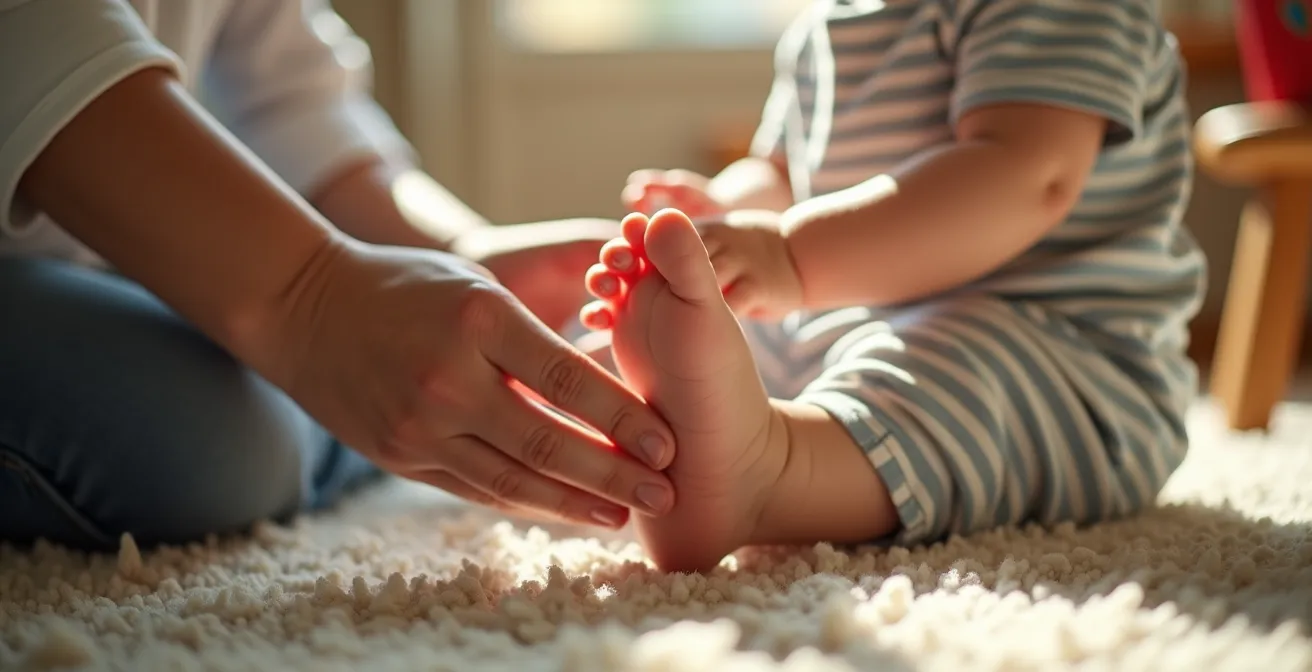
The common parental urge to “fix” a child’s gait with supportive shoes is often the opposite of what their developing feet need.
- Most flat feet and intoeing are normal developmental stages that self-correct by age 6.
- Barefoot time is not a risk but a crucial tool for building a strong, sensory-rich foot foundation.
Recommendation: Practice diagnostic patience. Observe your child’s development using our guide and only seek a specialist if you spot specific, persistent red flags like pain or asymmetry.
As a parent, you are the primary observer of your child’s development. That moment you notice the inward roll of an ankle, the way their toes point in when they run, or the near-total lack of an arch can be unsettling. The immediate instinct is often to intervene—to find the most “supportive” shoes, to search for special insoles, or to book a specialist appointment. This protective urge is completely understandable, but from a clinical perspective, it can sometimes be counterproductive.
The vast majority of childhood foot and gait “abnormalities” are not abnormalities at all. They are simply transient phases in a complex and brilliant developmental blueprint. The rush to correct what isn’t broken can interfere with the very processes that build a strong, resilient structural foundation for life. The key is not to ignore these observations, but to learn how to interpret them with what I call diagnostic patience. It’s about understanding the natural timeline of your child’s growth and knowing the precise intervention threshold—the line between a normal variation and a genuine red flag.
This guide is designed to give you that clinical framework. We will walk through the most common parental concerns, separating myth from medical fact. We will explore why time and natural movement are often the best medicine, and empower you to become a confident, informed partner in your child’s healthy development, knowing exactly when to observe and when to act.
This article provides a clinical framework to help you understand your child’s foot development. Below is a summary of the topics we will cover to help you navigate this journey with confidence.
Summary: A Clinical Framework for Your Child’s Foot Development
- Why Most Flat Feet Correct Themselves by Age 6 Without Intervention?
- How to Spot “Intoeing” and When It Requires a Doctor?
- Custom Insoles vs. Store-Bought: Which Is Worth the Money for Kids?
- The “Support” Mistake: Why Barefoot Time Is Crucial for Strength?
- When to See a Specialist: The Red Flags You Shouldn’t Ignore
- Why 60 Minutes of Movement a Day Is Non-Negotiable for Mental Health?
- Why Toddler Feet Are Cartilage and Easily Deformed by Wrong Shoes?
- How to Make Physical Exercise a Fun Family Habit That Sticks?
Why Most Flat Feet Correct Themselves by Age 6 Without Intervention?
One of the most frequent concerns brought to my clinic is flexible flatfoot in young children. When a toddler stands, their entire foot appears to press flat against the floor, causing significant parental anxiety. However, it’s crucial to understand that this is the norm, not the exception. A baby is born with a pad of fat in the arch area, and their bones and ligaments are incredibly flexible. The arch simply hasn’t formed yet; it’s part of the body’s developmental blueprint that emerges over time.
The clinical evidence for this is overwhelming. Research shows a dramatic natural improvement with age; one major study found that 54% of 3-year-olds have flat feet, compared to only 24% of 6-year-olds. This self-correction happens as the fat pad recedes and the muscles in the foot strengthen through walking, running, and jumping. The dynamic stress of movement is what literally builds the arch. Intervening with rigid arch supports during this critical window can act like a crutch, preventing those muscles from doing the work they need to do to get stronger.
Further studies have confirmed this hands-off approach is best, highlighting that over 90% of treatments for flexible flat feet in young children are unnecessary. A simple “wet test” at home can help you track progress: have your child step with a wet foot onto a piece of paper. In a young child, you’ll see a full footprint. As they approach age 5 or 6, you should start to see a curve appear on the inside of the footprint, indicating the arch is developing naturally. Unless the foot is stiff or causing pain, patience is the most effective prescription.
How to Spot “Intoeing” and When It Requires a Doctor?
Intoeing, or being “pigeon-toed,” is another common gait variation that often resolves on its own. It typically stems from one of three sources: a curve in the foot itself (metatarsus adductus), a twist in the shin bone (tibial torsion), or a twist in the thigh bone (femoral anteversion). Most cases are due to the latter two, which are simply remnants of the baby’s curled position in the womb. As the child grows, stands, and walks, these bones typically rotate into their correct alignment.
The key for parents is observation, not alarm. You can gather important clues at home. Notice your child’s walking and running pattern—does the entire leg turn in, or just the foot? When they sit on the floor, do their kneecaps point straight ahead or do they point inward toward each other? The latter often suggests the issue originates in the hip. You can also look at their shoes for tell-tale signs of uneven wear on the outer edges, which shows how their foot is compensating.
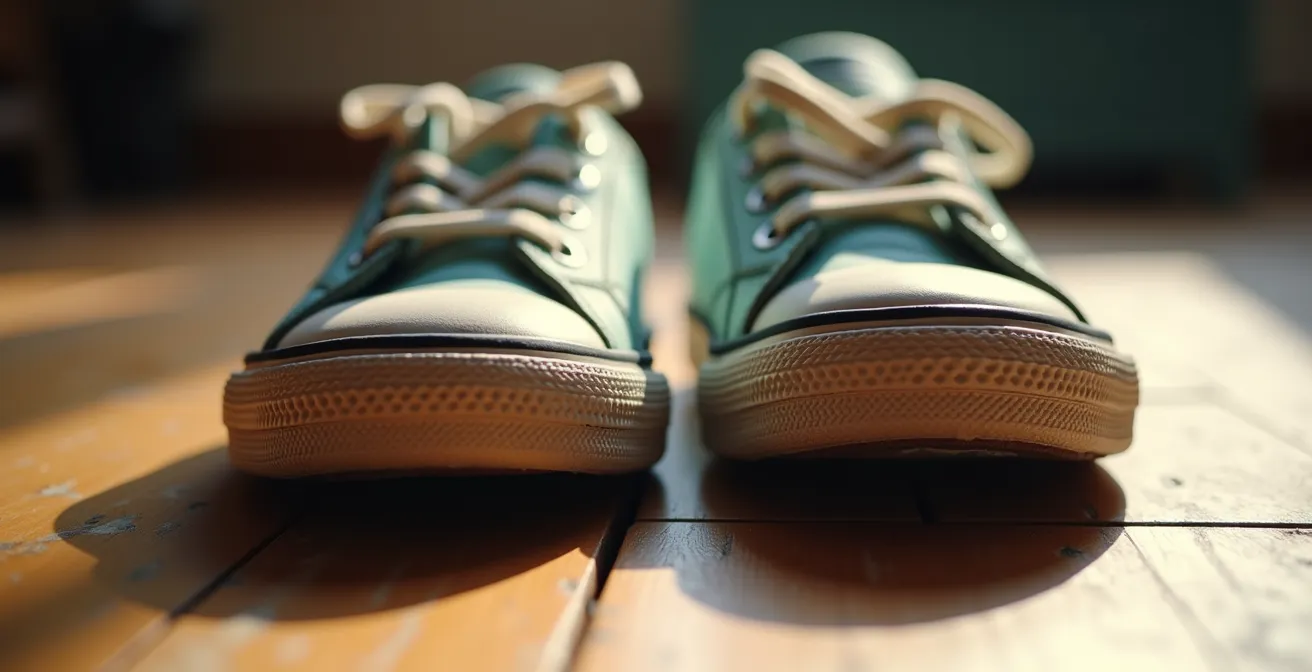
As Dr. Cindy Gellner, a pediatrician at University of Utah Health, reassures parents, “Most children really don’t need any treatment at all. The intoeing gets better on its own.” She notes that when caused by the shin bone, it usually corrects by around age 5. The primary reason to see a specialist for intoeing is if it’s severe, affects only one side, causes frequent tripping and falling that interferes with activity, or persists past age 8-10. Otherwise, diagnostic patience allows the body’s natural untwisting process to occur.
Custom Insoles vs. Store-Bought: Which Is Worth the Money for Kids?
When a parent is concerned about their child’s foot posture, the conversation often turns to orthotics. There’s a common belief that a custom-molded insole is the superior solution for any perceived problem. However, from a clinical standpoint, this is rarely the case for the most common childhood condition: flexible flatfoot. For this condition, the goal is not to artificially prop up the arch, but to provide comfort if needed while allowing the foot’s musculature to develop naturally.
For simple, flexible flat feet without pain, expensive custom orthotics are typically overkill. In fact, pediatric orthopedic research demonstrates that inexpensive, over-the-counter cushioned inserts often work just as well as their pricey custom counterparts for providing comfort. The primary role of an insert here is shock absorption, not aggressive correction. A soft, generic heel cup or cushioned insole can reduce any mild discomfort from activity without hindering the foot’s natural movement.
Custom orthotics do have a crucial role, but it is for a much smaller subset of children with more significant issues. These include rigid flat feet, painful conditions, or significant limb length discrepancies. In these cases, a device precisely molded to the child’s foot is necessary to provide specific correction and support. The following table breaks down the key differences, sourced from an analysis by pediatric foot and ankle specialists.
| Feature | Custom Orthotics | Store-Bought Insoles |
|---|---|---|
| Cost | $200-$600 | $20-$60 |
| Insurance Coverage | Often covered partially | Rarely covered |
| Effectiveness for Flexible Flat Feet | Not necessary | Adequate cushioning |
| Effectiveness for Rigid/Painful Conditions | Highly effective | Limited help |
| Lifespan | 1-2 years | 3-6 months |
| Customization | Precisely molded to child’s foot | Generic sizing only |
The takeaway is clear: don’t invest in expensive custom devices unless your child has a specific, diagnosed condition that warrants it. For most, a simple, affordable insert for comfort is more than enough.
The “Support” Mistake: Why Barefoot Time Is Crucial for Strength?
The instinct to put children in firm, “supportive” shoes from the moment they start walking is perhaps the most common mistake driven by good intentions. We associate support with safety, but for a developing foot, constant support can lead to weakness. The foot is a complex structure of 26 bones, 33 joints, and over 100 muscles, tendons, and ligaments. It is designed to be dynamic and adaptive. Barefoot time is the single best way to activate and strengthen this intricate system.
When a child is barefoot, thousands of nerves in the soles of their feet are stimulated, sending a rich stream of information to the brain about the surface they are on. This sensory feedback, or proprioception, is vital for developing balance, coordination, and a natural, efficient gait. Stiff, thick-soled shoes effectively numb this crucial foot-brain connection, dulling the sensory input and encouraging a less natural walking pattern. The foot doesn’t have to work as hard, and as a result, the small intrinsic muscles that support the arch fail to develop to their full potential.
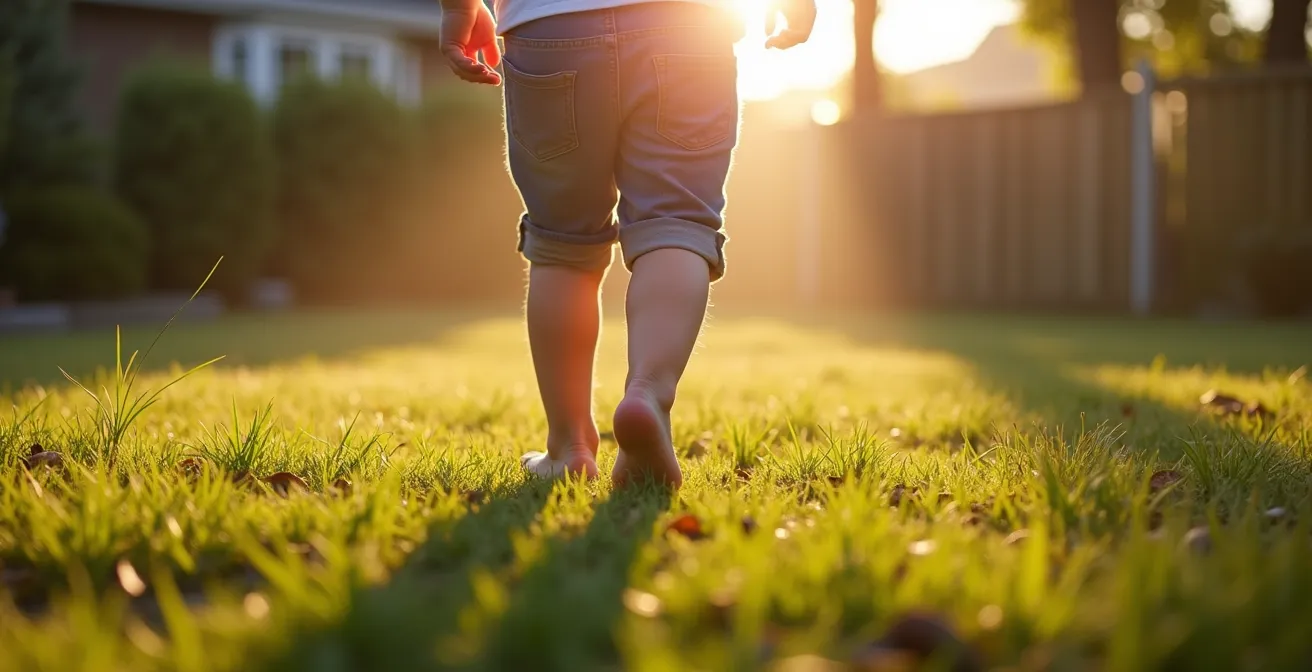
Encouraging barefoot time doesn’t have to be complicated. It’s about creating opportunities for the feet to move and feel freely, especially on varied and uneven surfaces which act like a natural gym. You can create a simple “indoor foot playground” with fun activities to promote strength:
- Towel Scrunches: Have your child sit and use only their toes to pull a towel toward them.
- Marble Pick-up: Make a game of picking up marbles or other small toys with their toes and placing them in a bucket.
- Texture Walk: Create a path with different safe materials like carpet squares, pillows, grass, and smooth tile for sensory input.
- Balance Challenges: Encourage standing on one foot or walking on a line to engage stabilizing muscles.
This isn’t about abandoning shoes entirely, but about recognizing that the “best” shoe is often no shoe at all, allowing the foot to build its own strong, natural support system.
When to See a Specialist: The Red Flags You Shouldn’t Ignore
While diagnostic patience is the guiding principle for most childhood foot variations, it is not a call for inaction. It is an active process of observation, and it’s vital to know the specific signs that cross the intervention threshold. These are the red flags that indicate a potential underlying issue that warrants a professional evaluation by a pediatric orthopedist or podiatrist. Ignoring these signs can lead to more significant problems down the line.
The single most important red flag is pain. A child’s foot development should not be painful. If your child frequently complains of foot, ankle, or leg pain, especially pain that wakes them up at night or causes them to stop playing, it needs to be investigated. Another major warning sign is asymmetry—a problem that appears in only one foot or leg. For example, if only the right foot turns in, or only the left foot appears flat, this is not a typical developmental pattern. Other key red flags include:
- Stiffness: If you cannot passively move the foot into a neutral position or see an arch appear when the child goes on tiptoe, the flatfoot may be “rigid” rather than “flexible.”
- Limping or Awkward Gait: Any new limp or a walking pattern that seems consistently awkward or inefficient.
- Frequent Tripping/Falling: If intoeing or another gait issue is causing your child to fall often and interferes with their ability to keep up with peers.
- Behavioral Changes: Suddenly wanting to be carried more often or avoiding activities they once enjoyed, like running or sports.
While most children with flat feet grow out of it, according to the American Academy of Pediatrics, only 1 or 2 out of 10 will continue to have them into adulthood. The presence of these red flags helps identify the children in that smaller group who may benefit from intervention.
Action Plan: Preparing for a Specialist Appointment
- Document Pain Details: Note if pain is sharp vs. dull, its location, the time of day it occurs (e.g., morning vs. after activity), and how often it happens.
- Track Behavioral Changes: Keep a log of when your child asks to be carried, avoids physical activities, or seems unusually fatigued.
- Note Asymmetry: Clearly state which foot or leg is of concern and describe the difference you observe compared to the other side.
- Record Gait Changes: Be ready to describe any new limping, persistent toe-walking, or an increase in tripping frequency.
- Photograph or Video Concerns: A picture or short video of your child’s foot posture while standing or their gait while walking can be incredibly helpful for the doctor.
Why 60 Minutes of Movement a Day Is Non-Negotiable for Mental Health?
While we’ve focused heavily on the mechanics of the foot, it’s impossible to separate its development from the health of the whole child. The recommendation for at least 60 minutes of moderate-to-vigorous physical activity daily is not just about cardiovascular health or preventing obesity; it is fundamentally linked to both mental well-being and the proper formation of the body’s structural foundation.
From a mental health perspective, daily movement is a powerful regulator. Physical activity releases endorphins, which have mood-boosting effects and help alleviate stress and anxiety. It improves sleep quality, which is critical for emotional regulation and cognitive function in children. For a child grappling with the social pressures of school or the frustration of learning new skills, that hour of play is not a luxury—it’s a necessary outlet that builds resilience. It offers a space for unstructured joy, self-expression, and a sense of mastery that is vital for self-esteem.
This same hour of activity is also the primary engine for orthopedic development. Dynamic activities like running, jumping, climbing, and dancing are precisely what stimulate bone growth and muscle strengthening. Specifically for the feet, every jump and change of direction puts a positive stress on the foot’s structures, signaling the muscles that support the arch to get stronger. Without this consistent, daily input, the developmental blueprint for a strong arch and stable ankle cannot be fully realized. Therefore, that 60 minutes of movement serves a dual purpose: it builds a happy, resilient mind and a strong, capable body, from the feet up.
Why Toddler Feet Are Cartilage and Easily Deformed by Wrong Shoes?
To truly understand the importance of proper footwear—or the lack thereof—we must look at the foot of a toddler. It is not a miniature version of an adult foot. At birth and through the first few years of life, a child’s foot is composed primarily of soft, pliable cartilage. The 26 bones that will eventually form the rigid structure of the adult foot are still developing and hardening, a process that isn’t largely complete until the late teens. During these early years, the foot is exceptionally malleable and susceptible to being deformed by external pressures.
This is why shoe choice is so critical. A shoe that is too rigid, too narrow, or has a constricting shape can act like a mold, forcing the soft cartilage to conform to an unnatural position. This can interfere with the natural splaying of the toes, which is essential for balance, and inhibit the development of the arch. It’s a critical fact of pediatric development that at six months, a baby’s feet are almost entirely cartilage, and even by age four, while the shape has solidified significantly, the bones are still very impressionable. Forcing them into ill-fitting shoes during this period can have lasting consequences.
When selecting a toddler’s first walking shoes, the goal should be to find a shoe that mimics the freedom of being barefoot as much as possible. It should serve as a layer of protection from the elements, not as a piece of corrective equipment. Here is a simple checklist for buying your toddler’s first shoes:
- The Fold Test: The shoe should bend easily where the toes bend (at the ball of the foot), not in the middle of the arch.
- The Twist Test: You should be able to twist the shoe slightly, showing it has some flexibility and isn’t completely rigid.
- The Thumb Rule: Ensure there is a thumb’s width of space between the end of the longest toe and the front of the shoe to allow for growth and movement.
- Wide Toe Box: The front of the shoe should be wide enough to allow the toes to spread out naturally, not be squeezed together.
- Avoid High-Tops: For general wear, low-cut shoes are preferable as they allow the ankle to move freely and build its own stabilizing strength.
Choosing the right shoe is about protecting the foot while interfering with its natural development as little as possible.
Key Takeaways
- Natural development is powerful; most common childhood foot “problems” like flexible flat feet resolve on their own with time.
- Barefoot time is not a risk but a non-negotiable tool for building foot strength, balance, and crucial sensory awareness.
- Intervention like custom orthotics is reserved for specific red flags like pain, stiffness, or asymmetry, not for normal developmental variations.
How to Make Physical Exercise a Fun Family Habit That Sticks?
Understanding the importance of barefoot time and daily movement is the first step. The second, and more challenging step, is integrating it into a busy family life in a way that feels like fun, not a chore. The key to building a lasting habit of physical activity is to make it joyful, social, and part of your family’s routine. When exercise is framed as play, children are intrinsically motivated to participate, and the benefits for their physical and mental health follow naturally.
One of the best ways to do this is to get outside together. A 2018 study comparing children in Germany and South Africa found that those who regularly played barefoot, especially in nature, showed significantly improved motor skills, particularly in balance and jumping. These skills are a direct reflection of a well-developed structural foundation. Turning this into a family activity amplifies the benefits, strengthening family bonds while building healthy bodies. Instead of thinking of it as “exercise,” think of it as an adventure.
You can create fun, competitive games that specifically target foot and ankle strength without the kids even realizing they’re doing “therapy.” A “Family Foot Olympics” in the backyard can become a cherished tradition. Try a few of these simple, engaging games:
- Towel-Scrunch Race: See who can pull a beach towel across a finish line the fastest using only their toes.
- Sock-Pickup Relay: Create teams and compete to pick up scattered socks with your feet and drop them in a laundry basket.
- Balance Championship: Time how long each family member can stand on one foot on different surfaces, like grass or a pillow.
- Marble Transfer: Use your toes to move marbles or small pebbles from one container to another.
By making movement a source of connection and laughter, you are giving your child a gift that extends far beyond arch development. You are teaching them that an active life is a joyful one, setting the stage for a lifetime of health and well-being.
To confidently support your child’s growth, the next step is to embrace this observational approach. Start by creating more opportunities for barefoot play and use this guide to track their natural, healthy progress. Your informed patience is their strongest support.