
In summary:
- Effective self-regulation starts with teaching children to recognize internal body signals like hunger and fatigue, not just managing external behavior.
- Shift your goal from short-term compliance (“Stop that!”) to long-term skill-building (“What is your body telling you right now?”).
- Create supportive environments and use age-appropriate tools, like a “Peace Corner” and sensory activities, to help your child’s nervous system regulate.
- Practice co-regulation: act as a calm, supportive partner during your child’s distress, modeling the self-control you want to teach.
Does this sound familiar? You’ve asked your child to put on their shoes for the tenth time. Instead, they are spinning in circles, poking their sibling, or suddenly fascinated by a speck of dust on the floor. The constant reminders, the escalating frustration, and the feeling that you’re a broken record are exhausting. You’re not just tired of nagging; you’re worried that your child will never learn to manage their own impulses. Many parents believe the solution lies in stricter rules or more creative reward charts, but these are often just external patches on an internal issue.
The common advice to “be consistent” or “use consequences” often misses the root cause. These strategies aim for compliance, a temporary halt in the unwanted behavior. They don’t, however, teach the foundational skill of self-regulation. The truth is, a child’s impulsivity is rarely a conscious choice to be defiant. More often, it’s a sign that their internal “body budget” is depleted—they’re running low on fuel from hunger, exhaustion, or sensory overload.
But what if the key wasn’t in adding more rules, but in shifting your entire approach? What if, instead of being a behavior manager, you could become your child’s trusted co-regulation coach? This guide will change your perspective. We will move beyond the surface-level battle for control and dive into the underlying mechanics of a child’s nervous system. You will learn not just what to do, but *why* it works.
We’ll explore how to help your child decode their own body’s signals, build an environment that calms instead of overstimulates, and use connection-based techniques that build lifelong skills. This is your roadmap to leaving the nagging behind and stepping into a partnership that fosters genuine, lasting self-control.
This article provides a structured approach to transform your parenting. Below is a summary of the key strategies we will cover to help you and your child navigate the path to self-regulation together.
Summary: A Coach’s Framework for Building Your Child’s Self-Control
- Why Hunger and Fatigue Destroy Self-Control in Even the Best Kids?
- How to Build a “Peace Corner” That Your Child Actually Wants to Use?
- Compliance vs. Regulation: Which One Are You Really Teaching?
- The “Halo Effect” Error That Misses the Real Cause of Misbehavior
- When to Introduce “Square Breathing”: A Guide for Ages 3 to 10
- Why Sensory Play Calms High-Energy Kids Before Bedtime?
- Time-Out vs. Time-In: Which Method Builds Better Self-Control?
- How to Co-Regulate With Your Child When You Are Also Stressed?
Why Hunger and Fatigue Destroy Self-Control in Even the Best Kids?
Before we can teach a child to manage their big emotions and impulsive actions, we must first understand the biological foundation of self-control. Think of your child’s brain as having two parts: a primal, instinct-driven “downstairs brain” and a logical, forward-thinking “upstairs brain.” The prefrontal cortex, the home of the upstairs brain, is responsible for executive functions like impulse control and emotional regulation. However, it’s a massive energy consumer. When a child’s basic physiological needs—their “body budget”—are not met, the upstairs brain essentially goes offline. All its energy is redirected to survival, and the downstairs brain takes over.
This is why a perfectly well-behaved child can suddenly “fall apart” right before dinner or melt down after a long day at school. It isn’t defiance; it’s a system failure. Their fuel tank is empty. The skill of recognizing these internal cues is called interoception. Children, especially those with high energy or ADHD traits, often struggle to notice or interpret these signals until they are at a crisis point. They don’t feel “a little hungry”; they feel “STARVING and angry” all at once. Groundbreaking research from Yale University shows that targeted interventions to improve this mind-body connection lead to statistically significant improvements in emotional regulation.
Our job as parents is to become external interpreters of these cues. Instead of asking “Why are you acting this way?” we can start asking, “I wonder what your body needs right now?” We can teach them to conduct an “Internal Weather Report” by connecting their feelings to physical sensations. You might say, “I notice you’re getting wiggly and your voice is loud. Let’s do a body check. Is your tummy full or empty? Is your body feeling tired or full of bouncy energy?” This reframes the problem from a character flaw (“You’re being bad”) to a logistical one (“Your fuel tank is low”). By linking behavior to biology, you empower your child with the data they need to eventually regulate themselves.
This shift from managing behavior to monitoring biology is the first and most critical step in teaching self-regulation without nagging. It moves you from adversary to ally.
How to Build a “Peace Corner” That Your Child Actually Wants to Use?
The traditional “calm-down corner” often fails because it feels like a punishment—a nicely decorated time-out spot. To be effective, this space must be reframed as a “Recharge Station” or “Peace Corner,” a place your child *chooses* to go to when their internal battery is running low. The goal is not isolation, but voluntary self-regulation. It should be a ‘yes’ space, filled with tools that help their nervous system reset, not a ‘no’ space associated with shame or anger. The key is to introduce and practice using the corner when your child is calm and regulated, not in the heat of a meltdown.
A truly effective Peace Corner is designed with sensory input in mind. It’s not about what looks cute on Pinterest; it’s about what your child’s unique nervous system craves. Does your child seek deep pressure? Include a weighted lap pad or a stretchy resistance band. Do they need to block out overwhelming stimuli? Offer noise-reducing headphones or a cozy tent. The space should be co-created with your child, giving them ownership and making it a desirable retreat.
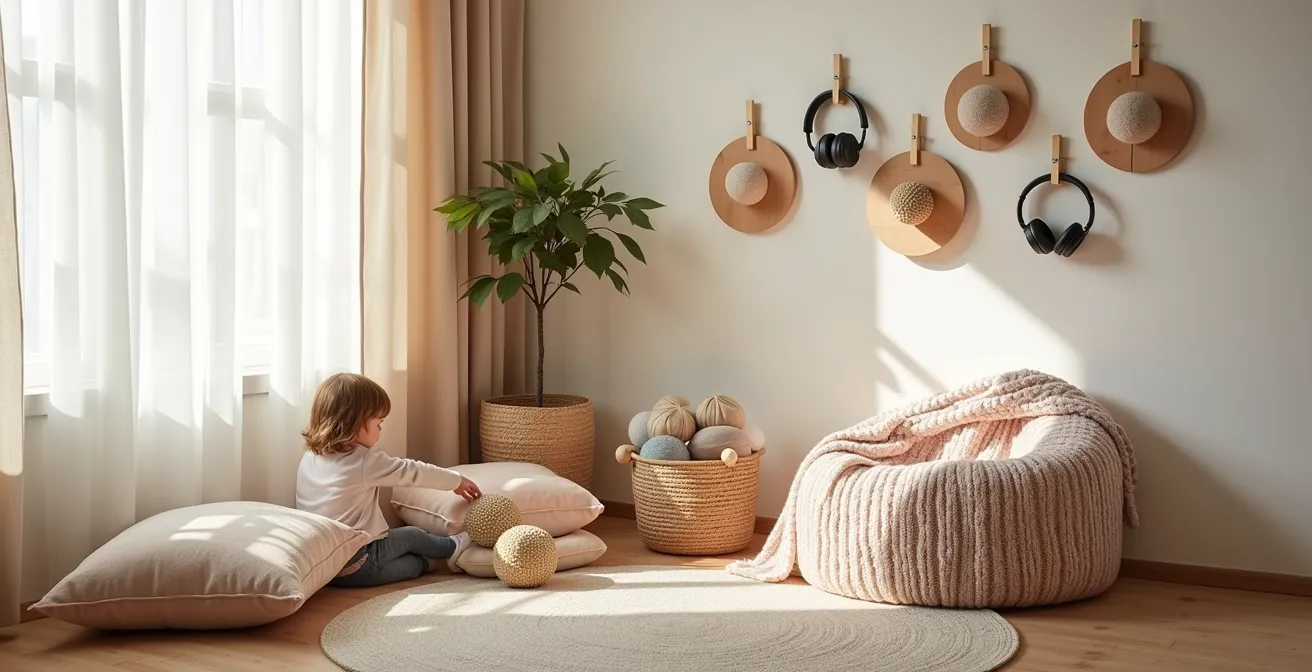
As you can see, a well-designed space is about textures and tools, not toys. The purpose is to lower stimulation, not add more. Essential elements could include soft blankets, a bean bag chair, a small basket with fidget tools like therapy putty or a sequin pillow, and perhaps a visual timer. The language you use is also critical. Instead of “Go to the calm-down corner!” you might say, “It looks like your body needs a break. Would you like to go to your Peace Corner to recharge for a few minutes?” This invitation respects their autonomy and reinforces that regulating their body is a positive, proactive choice.
Ultimately, a Peace Corner is a physical manifestation of co-regulation. It’s a tool you provide to help your child do the hard work of calming their own body, a skill they will carry with them long after they’ve outgrown the corner itself.
Compliance vs. Regulation: Which One Are You Really Teaching?
As parents of impulsive children, we often find ourselves in a cycle of reactive commands: “Stop running!” “Be quiet!” “Don’t touch that!” While these phrases might achieve a moment of peace, they are focused on one thing: compliance. Compliance is about external control. It teaches a child to modify their behavior to avoid a negative consequence or to please an adult. Regulation, on the other hand, is an internal skill. It’s the ability to manage one’s own energy, emotions, and actions. Every interaction with our child is a lesson, and it’s crucial to ask ourselves: are we teaching them to obey, or are we teaching them to self-regulate?
Dr. Matthew Rouse, a clinical psychologist, highlights this critical distinction. He explains that when parents constantly step in to soothe or command, they become “external self-regulators.” In his words, this can prevent children from developing their own self-discipline. As he states in an article for the Child Mind Institute:
When parents give in to tantrums or work overtime to soothe their children when they get upset and act out, kids have a hard time developing self-discipline. In those situations, the child is basically looking to the parents to be external self-regulators.
– Dr. Matthew Rouse, Child Mind Institute
Shifting from a compliance mindset to a regulation mindset starts with changing our language. It involves moving from judgment to curiosity. The table below, inspired by insights from the Child Mind Institute on self-regulation, illustrates how small shifts in wording can make a huge difference in the skill you are building.
| Compliance-Focused (External Control) | Regulation-Focused (Internal Skill Building) |
|---|---|
| ‘Stop it right now!’ | ‘I see you’re having a hard time. What’s your body telling you?’ |
| ‘Because I said so’ | ‘Let’s think about why this is important together’ |
| ‘If you don’t stop, then…’ | ‘Where is a safe place we can get that energy out?’ |
| ‘Go to your room!’ | ‘Let’s try a reset breath together’ |
| ‘You’re being bad’ | ‘Your feelings are big right now. That’s okay’ |
Choosing regulation over compliance is a long-term investment. It may feel slower and less direct in the moment, but it equips your child with the internal compass they need to navigate life’s challenges independently, long after you are there to give commands.
The “Halo Effect” Error That Misses the Real Cause of Misbehavior
One of the most common and frustrating traps for parents is what I call the “Halo Effect” error. This happens when a child, who is often bright, charming, and capable of being “good,” has a sudden, intense meltdown. Because we’ve seen them hold it together before, we interpret the outburst as willful defiance or manipulation. We think, “You know better! I just saw you behaving perfectly at grandma’s house!” This is the Halo Effect: their past “good” behavior creates an unrealistic expectation of their current capabilities, blinding us to the real, underlying cause of the misbehavior.
The truth is, that “good” behavior often comes at an enormous cost to their internal resources. They were likely using every ounce of their energy to meet expectations, depleting their “body budget” to zero. The subsequent meltdown isn’t a choice; it’s the system crashing. Our expectations are often profoundly misaligned with a child’s developmental reality. In fact, a Bezos Family Foundation study revealed that 56% of parents believe children have the impulse control to resist temptation before age 3, but neuroscience shows this ability only begins to emerge between 3.5 and 4 years old. We are expecting a skill that the brain hardware simply cannot yet support.
To avoid this error, we must become detectives of their internal state, not just judges of their external behavior. Instead of being surprised by the meltdown, we need to learn to spot the subtle warning signs that their “halo” is draining their battery. Are they getting a bit more wiggly? Is their voice getting louder? Are they starting to argue over small things? These are not pre-defiant acts; they are SOS signals from a dysregulated nervous system. Acknowledging this helps us shift from frustration (“Why are you doing this to me?”) to empathy and proactive support (“I can see you’re struggling. Let’s take a break before your battery runs out completely.”). This reframe allows us to address the root cause, not just punish the symptom.
By seeing past the halo and recognizing the cost of self-control, we can intervene with support before the system crashes, preventing the meltdown and teaching our child to recognize their own limits.
When to Introduce “Square Breathing”: A Guide for Ages 3 to 10
“Just take a deep breath!” is one of the most common—and often least effective—pieces of advice given to an upset child. For a dysregulated mind, an abstract command like “breathe” is impossible to follow. This is where structured breathing techniques like Square Breathing come in. The technique involves a simple pattern: breathe in for a count of four, hold for four, breathe out for four, and hold for four, as if tracing the sides of a square. However, its effectiveness is entirely dependent on *when* and *how* it’s introduced. You cannot teach a child to breathe during a storm; you must practice it in the calm.
The ability to use breathing techniques evolves with a child’s cognitive development. Forcing an abstract concept on a young child will only lead to more frustration. A developmental approach is essential. According to research from pioneers like Dr. Harvey Karp, compiled by organizations like Connected Families on equipping kids with self-regulation skills, the progression should look like this:
- Ages 3-4 (Physical/Sensory): At this age, breathing must be tied to a physical, sensory experience. Abstract counting doesn’t work. Instead, use playful analogies like “smell the flower” (breathe in) and “blow out the candle” (breathe out).
- Ages 5-7 (Visual/Gamified): Children in this age group are now able to connect their breath to a visual guide. This is the perfect time to introduce a physical square breathing board or a visual app. Tracing the square with their finger provides tactile feedback that anchors their focus.
- Ages 8-10+ (Abstract/Cognitive): By this age, many children can internalize the pattern without a physical guide. They can master the cognitive task of counting in their head and can learn more complex patterns like 4-7-8 breathing (in for 4, hold for 7, out for 8).
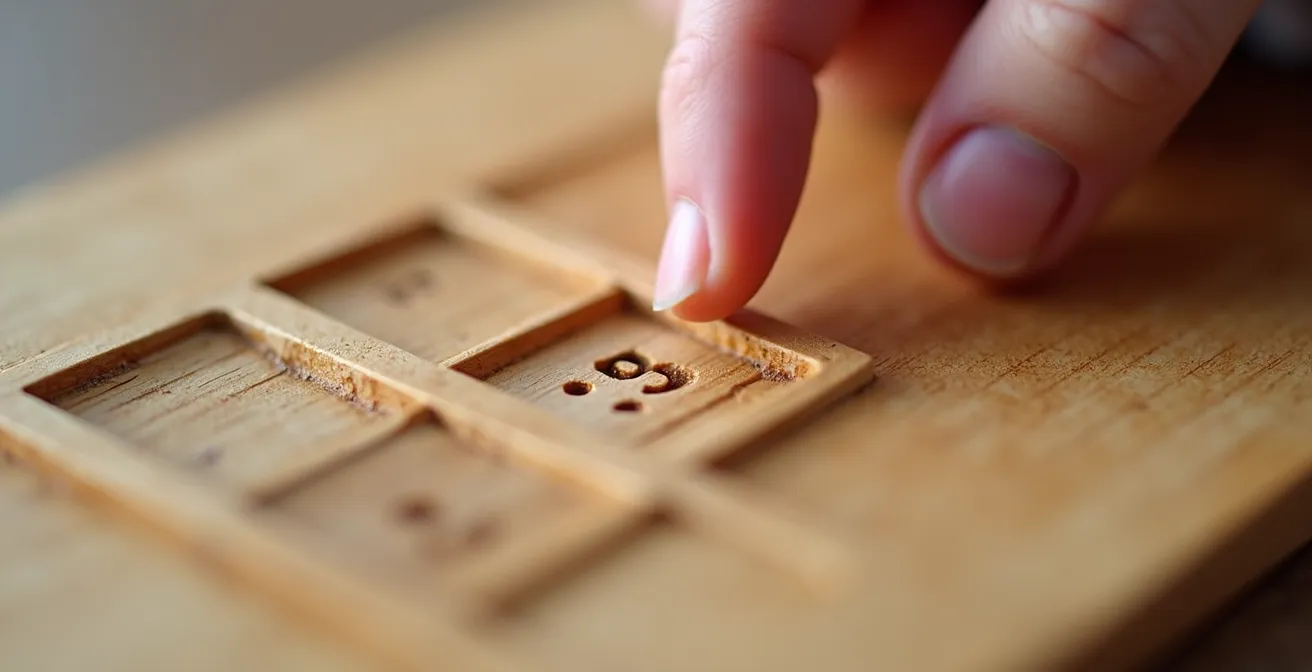
The crucial takeaway is that these techniques must be practiced daily when the child is happy and calm. Make it a game for one or two minutes after school or before bed. This builds the neural pathways so that when stress hits, the tool is familiar and accessible. Trying to teach square breathing for the first time during a tantrum is like handing someone a fire extinguisher manual while their house is on fire. It’s the right tool at the absolute wrong time.
By matching the technique to your child’s developmental stage and practicing during times of calm, you transform breathing from a frustrating command into a powerful, lifelong tool for self-regulation.
Why Sensory Play Calms High-Energy Kids Before Bedtime?
The hour before bedtime can be the most chaotic of the day. Just when you want your high-energy child to wind down, they seem to ramp up, bouncing off the walls and resisting the routine. This isn’t a last-ditch effort to avoid sleep; it’s often a final, desperate attempt by their nervous system to get the sensory input it has been craving all day. We expect their brain to go from 60 to 0 with a simple command, but neurologically, that’s impossible. As child psychology experts confirm, the prefrontal cortex responsible for impulse control and winding down is still massively under construction until age 25.
Instead of fighting this need for movement and input, we can strategically use it to guide the nervous system toward a state of calm. This is the principle behind a “sensory diet”—a planned sequence of activities that provides the right kind of input at the right time. A bedtime sensory routine isn’t about more playtime; it’s a structured workout for the nervous system that moves from alerting activities to organizing and finally, to calming ones. This process helps meet the body’s needs so the brain can finally rest.
The goal is to provide intense proprioceptive input (input to the muscles and joints) and vestibular input (related to balance and movement) in a controlled way. This “heavy work” has a powerful organizing effect on the brain. Instead of unstructured bouncing, a planned sequence helps the body feel grounded and secure, signaling to the brain that it’s safe to power down. An effective routine honors the body’s need for input before demanding it be still.
Your Action Plan: The Bedtime Sensory Diet Sequence
- Alerting Vestibular Activity (5 mins): Start by meeting their need for big movement. This could be jumping on a mini-trampoline or bouncing on a yoga ball.
- Heavy Work (10 mins): Transition to organizing input. Activities like “wheelbarrow” walks, wall push-ups, or carrying a (safely weighted) laundry basket provide deep muscle feedback.
- Calming Proprioceptive Input (15 mins): This is the core of winding down. Roll your child up tightly in a blanket to make a “burrito,” or gently roll a yoga ball over their back and legs to provide deep pressure.
- Organizing Activity (5 mins): Offer a final, quiet activity that keeps hands busy, like squishing therapy putty or sorting items in a sensory bin.
- Final Transition (Ongoing): As you move to the final steps of bedtime (stories, songs), dim the lights and offer a weighted blanket for sensory-seeking kids or gentle, predictable rocking for those who avoid touch.
By implementing a short sensory diet, you stop fighting your child’s biology and start working with it. You provide the necessary input their body is screaming for, allowing their mind to finally find the peace it needs for sleep.
Time-Out vs. Time-In: Which Method Builds Better Self-Control?
For decades, the “time-out” has been the go-to disciplinary tool for parents. The logic seems simple: remove a child from a situation to stop a negative behavior. However, a growing body of research suggests that while time-out might achieve short-term compliance, it can be counterproductive for building long-term self-regulation. When a child is in the midst of a meltdown, their behavior is a signal of distress, not defiance. Sending them away alone can communicate, “Your big feelings are too much for me,” and “You have to handle this by yourself.” This isolation can escalate their distress and misses a crucial opportunity to teach them *how* to calm down.
The alternative is the “Time-In.” This approach reframes the moment of dysregulation as an opportunity for connection and co-regulation. Instead of sending the child away, you invite them to be with you in a quiet space to calm down together. This doesn’t mean condoning the behavior; it means prioritizing the regulation of the child’s nervous system before addressing the behavior. Lauren Marchette, a psychiatry lecturer at Harvard Medical School, defines this supportive process perfectly in a Harvard Health Blog post on co-regulation:
Co-regulation is a supportive, interactive, and dynamic process. At its heart, co-regulation is connecting with a child who’s in distress and being able to evaluate what that child needs in the moment to help calm themselves.
– Lauren Marchette, Harvard Medical School psychiatry lecturer
A Time-In is not a reward for bad behavior. It’s a direct response to the underlying emotional distress. It teaches a child that you are their safe space, that their big feelings are manageable, and that you are there to help. This modeling of calm and empathy is how they learn to eventually do it for themselves. The “Connect Before You Correct” model is a powerful way to implement this.
Case Study: The “Connect Before You Correct” Time-In
A great example from Harvard-affiliated experts involves 12-year-old ‘Eric,’ who was having a meltdown over a writing assignment, throwing items off his desk. His mother practiced co-regulation. First, she paused to take a deep breath herself. Then, she sat silently nearby, offering her physical presence without forcing touch. She validated his feelings, saying, “This assignment is really frustrating.” Only after Eric began to calm down did they problem-solve the assignment together. Her approach didn’t reward his outburst but responded to his distress, teaching him that she was a partner in solving his problems.
Choosing a Time-In over a Time-Out is a conscious decision to prioritize connection and skill-building over immediate control. It sends a powerful message: “We are a team, and we can get through these tough moments together.”
Key Takeaways
- Body Budget Over Behavior: A child’s misbehavior is often a symptom of a depleted internal “fuel tank” (hunger, fatigue, overstimulation), not a conscious choice of defiance. Address their biological needs first.
- Co-regulation Over Control: Your calm, supportive presence during a child’s distress is the most powerful teaching tool. Aim to be their coach and partner, not just an enforcer of rules.
- Tools Over Punishment: Equip your child with age-appropriate, tangible tools for self-regulation (like sensory diets and breathing exercises) and practice them during times of calm, not just in moments of crisis.
How to Co-Regulate With Your Child When You Are Also Stressed?
The concept of co-regulation is beautiful in theory, but what happens when your child’s meltdown triggers your own? It’s incredibly difficult to be a calm anchor for your child when you are also feeling overwhelmed, frustrated, and dysregulated. In these moments, it can feel like your own nervous system is on fire. This is the most challenging, and most important, aspect of co-regulation: it requires us to regulate ourselves first. You cannot give away a resource you don’t have. If you are not calm, you cannot help your child find their calm.
Recognizing this is not a failure; it is a critical insight. Our children’s nervous systems are deeply attuned to ours. When we yell, our stress and adrenaline are biologically contagious, escalating their distress rather than soothing it. The most effective first step in co-regulating with your child is to take a moment to co-regulate with yourself. This might feel impossible in the heat of the moment, but it can be as simple as a three-second reset. The goal isn’t to achieve perfect zen, but simply to get your own “upstairs brain” back online so you can respond thoughtfully instead of reacting impulsively.
Modeling this process is one of the most powerful lessons you can offer. Saying out loud, “I’m feeling really frustrated right now, so I’m going to take a big breath to help my body calm down,” is not a sign of weakness. It’s a demonstration of incredible strength and self-awareness. It teaches your child that feelings like anger and frustration are normal, that even adults experience them, and that there are concrete strategies to manage them. It also gives you the precious seconds you need to avoid saying or doing something you’ll later regret.
- Press your feet firmly into the floor to ground yourself.
- Name your emotion silently to yourself (“I am overwhelmed”).
- Take one long, slow exhale, longer than your inhale.
- Model your process aloud: “Wow, my anger is bubbling up. I need to put a hand on my chest and take a breath.”
- If you lose control, repair: “I’m sorry I yelled. I was feeling overwhelmed. Let’s try that again together.”
This journey of teaching self-regulation is as much about our own growth as it is about our child’s. By learning to be a calm, regulated presence, we not only help our children navigate their storms, but we also create a more peaceful and connected environment for the entire family.