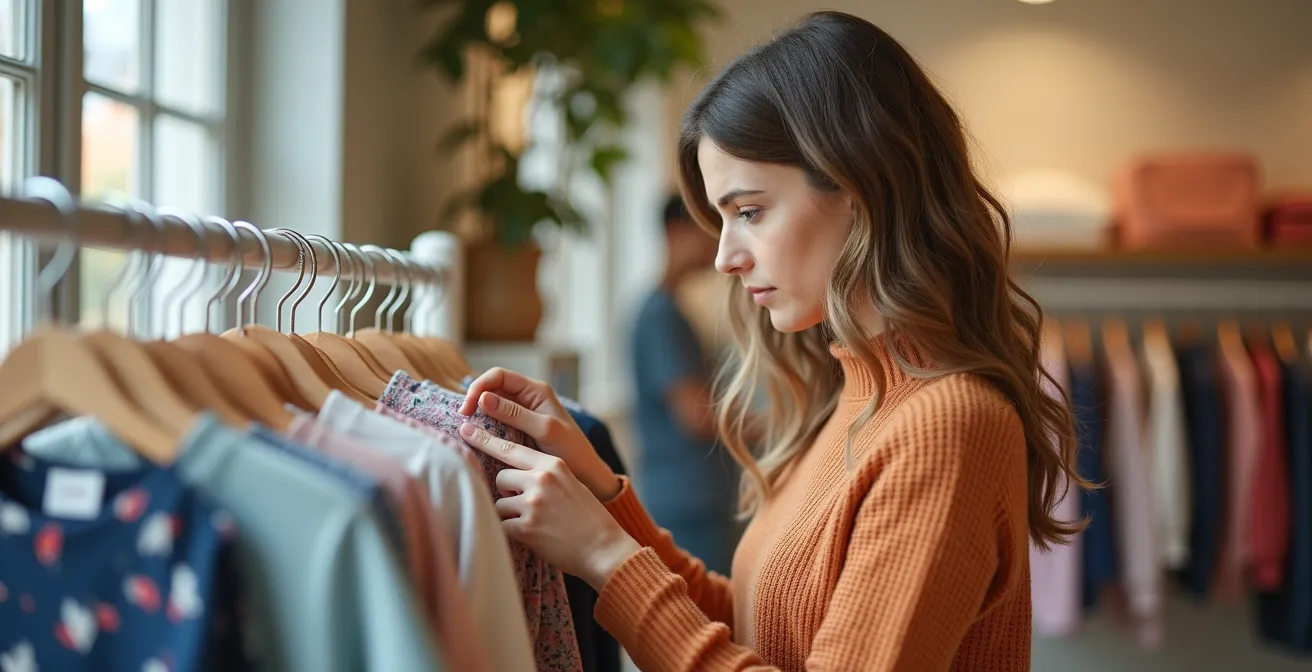
“Eco-friendly” and “Made in Europe” labels on kids’ clothes are often a marketing illusion designed to hide unethical practices and environmental harm.
- Certifications like Oeko-Tex don’t guarantee ethical labor, and recycled polyester still sheds harmful microplastics.
- A higher-priced, quality garment often has a lower ‘cost-per-wear’ than cheap fast fashion, making it the smarter economic and ethical choice.
Recommendation: Stop trusting vague marketing claims and start auditing garments for quality, understanding their full lifecycle, and prioritizing truly holistic third-party certifications like GOTS.
As a conscious parent, you navigate a minefield of choices every day. You want the best for your child, and that extends to the clothes they wear. You look for “organic,” “recycled,” or “Made in Europe,” believing you’re making an ethical choice. But what if these labels are not just unhelpful, but actively misleading? The fashion industry, particularly fast fashion, has become masterful at greenwashing—using vague environmental claims to obscure a reality of poor labor conditions and unsustainable practices.
Many guides will tell you to “read the labels” or “choose natural fabrics.” This is well-intentioned but insufficient advice in a world where marketing is more sophisticated than ever. Brands know you’re looking for these keywords and use them to their advantage, creating a smokescreen that conceals the true impact of their products. The real key isn’t just to look for positive signs, but to develop a vigilant eye for the loopholes, the omissions, and the half-truths. It’s about understanding that a £5 t-shirt has a hidden cost, paid by someone, somewhere along the supply chain.
This guide moves beyond the surface-level advice. We will equip you with the critical thinking tools to dismantle greenwashing claims piece by piece. Instead of just accepting a label, you will learn to question it. We will explore why a “Made in Europe” tag can be a red herring, what certifications like GOTS and Oeko-Tex truly mean (and what they leave out), and how to calculate the real value of a garment beyond its initial price tag. Get ready to become a more empowered, informed consumer who can truly align their purchases with their values.
Contents: A Parent’s Guide to Ethical Kids’ Fashion
- Why “Made in Europe” Doesn’t Always Mean Ethical Labor?
- How to Read a GOTS Label vs. Oeko-Tex Standard 100?
- Recycled Polyester vs. Organic Cotton: Which Is truly More Eco-Friendly?
- The Donation Mistake: Why Your Old Clothes Likely End Up in Waste?
- When to Resell: Preserving Garment Value for the Second-Hand Market
- The Bottled Water Mistake That Exposes Kids to Microplastics
- Why a £30 Shirt Can Be Cheaper Than a £5 One Over Six Months?
- How to Keep Active Kids Cool in Summer Using Organic Cotton?
Why “Made in Europe” Doesn’t Always Mean Ethical Labor?
The “Made in Europe” label often evokes images of skilled artisans working in fair conditions. Brands leverage this perception, using it as a shorthand for quality and ethical production. However, this geographic tag can be one of the most subtle forms of greenwashing. While some European countries have strong labor laws, “Europe” is a continent with vast disparities. Production can be outsourced to countries with weaker regulations and lower wages, where garment workers face conditions not dissimilar to those in infamous fast-fashion hubs elsewhere.
The label can legally be applied if the “last substantial transformation” of the product happened in Europe. This means a garment could be almost entirely assembled in a low-wage country with poor oversight, with only the final touches—like sewing on buttons or adding a label—completed within the EU. This practice allows brands to benefit from the positive association of European manufacturing without adhering to its highest standards throughout the entire supply chain. The problem is a lack of transparency; a generic “Made in Europe” claim tells you nothing about the specific factory or the wages paid to the people who made your child’s clothes.
This ambiguity is a common tactic among fast-fashion giants who want to appear more sustainable than they are. For instance, a detailed analysis by Ethical Consumer reveals that the UK range of a major online retailer contained a mere 0.5% recycled materials, despite heavy “conscious” marketing. This shows how easily grand claims can fall apart under scrutiny. To be a vigilant consumer, you must demand more than a continental label. Look for brands that specify the exact country and, even better, the specific factory of production. True transparency is the only antidote to this geographic fallacy.
How to Read a GOTS Label vs. Oeko-Tex Standard 100?
When you see a certification on a clothing tag, it feels like a trustworthy stamp of approval. However, not all labels are created equal. Understanding the difference between the two most common textile certifications, GOTS and Oeko-Tex, is fundamental to spotting greenwashing. Oeko-Tex Standard 100 is a safety certification. It tests the final product for a list of harmful substances to ensure it’s safe for human skin. This is important, especially for children’s clothing, but it is not a sustainability or ethical standard. It tells you nothing about whether the cotton was grown organically, how much water was used, or if the garment worker was paid a living wage.
The Global Organic Textile Standard (GOTS), on the other hand, is the gold standard for true sustainability. It’s a holistic certification that scrutinizes the entire supply chain, from the organic farm to the finished garment. For a product to be GOTS-certified, it must contain a minimum of 70% certified organic fibers. More importantly, GOTS enforces strict environmental criteria throughout the processing stages and includes robust social criteria based on the key norms of the International Labour Organization (ILO). This means it addresses water usage, chemical inputs, and ensures fair labor practices, including safe working conditions and a ban on child labor.
A brand using an Oeko-Tex label to imply it is “eco-friendly” or “ethical” is a classic greenwashing tactic. They are using a safety standard to create a halo of overall sustainability. As a vigilant parent, when you see a certification, ask yourself what it truly guarantees. The table below breaks down the crucial differences.
| Aspect | GOTS | Oeko-Tex Standard 100 |
|---|---|---|
| Scope | Entire supply chain from farm to finished product | Final product testing only |
| Organic Content | Minimum 70% organic fibers required | No organic requirement |
| Labor Standards | Strict social criteria including living wages | No labor standards included |
| Environmental Processing | Restricts chemicals throughout production | Tests for harmful substances in final product |
| Sustainability Indicator | Gold standard for eco & social credibility | Safety standard, not sustainability |
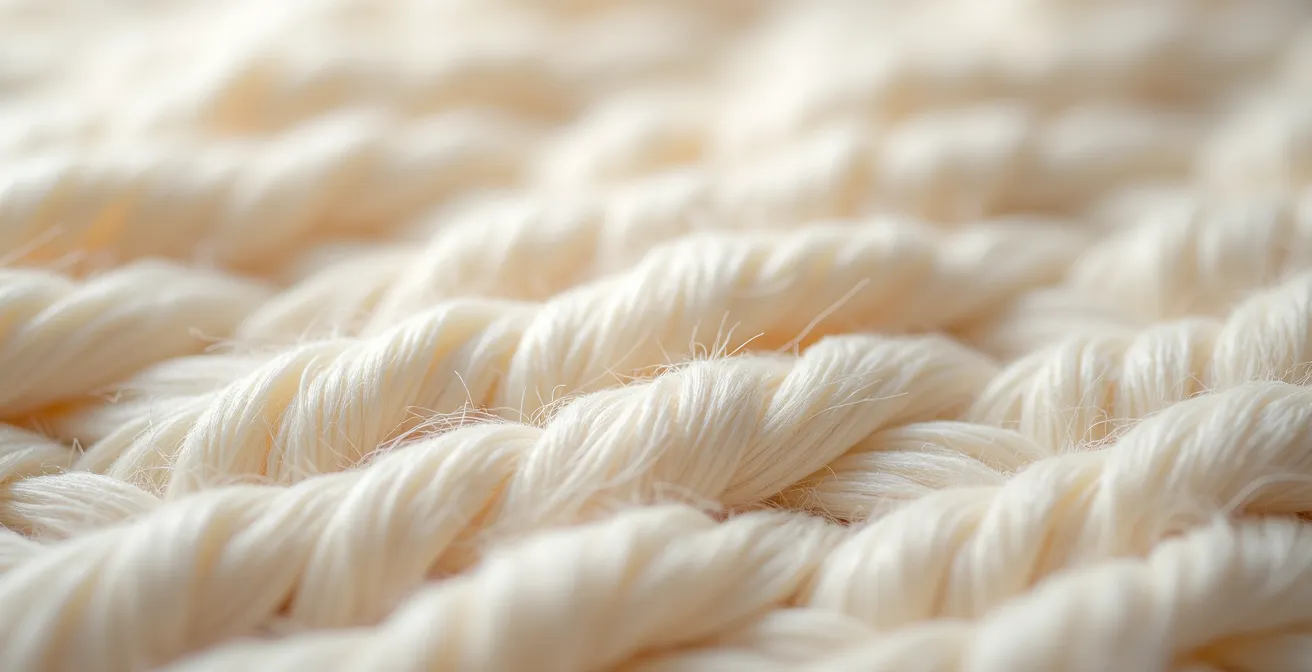
This macro photograph highlights the natural, unprocessed texture of organic cotton, the very foundation of a GOTS-certified product. It’s a reminder that true sustainability begins with the raw material itself.
Choosing GOTS is choosing a system that values both planetary and human health. It is one of the few labels that offers a genuine assurance of ethical and environmental responsibility, moving far beyond simple product safety.
Recycled Polyester vs. Organic Cotton: Which Is truly More Eco-Friendly?
The “recycled polyester” tag is everywhere, often presented as the ultimate eco-friendly solution. The logic seems simple: we’re turning plastic bottles into clothes, which must be good for the planet. While it does divert plastic from landfills, this narrative is an oversimplification that masks significant environmental problems. Firstly, the process of recycling polyester is energy-intensive. More critically, whether virgin or recycled, polyester is a plastic. Every time you wash a garment made from it, it releases thousands of microplastic fibers into our water systems. These tiny plastic particles are too small to be filtered out by wastewater treatment plants and end up in our oceans, soil, and food chain.
Organic cotton, by contrast, is a natural fiber that is biodegradable. When grown according to organic standards (like those required by GOTS), it is cultivated without synthetic pesticides or fertilizers, which is better for soil health, biodiversity, and farmers’ well-being. Its main environmental drawback is its high water consumption. However, many organic farms are increasingly using rainwater harvesting and efficient irrigation to mitigate this. When you weigh the temporary benefit of diverting a plastic bottle against the permanent pollution of microplastics, organic cotton often emerges as the more holistically sustainable choice, especially for items worn directly against a child’s skin.
The fashion industry’s impact is staggering, responsible for an estimated 10% of global carbon emissions and consuming vast amounts of water. In this context, brands heavily promoting recycled polyester without acknowledging the microplastic issue are engaging in greenwashing. They are highlighting one positive aspect while ignoring a major negative one. This lack of accountability is pervasive in an industry that remains largely unregulated. As a report from Business of Fashion & McKinsey highlights:
In the absence of government mandates, many companies have implemented their own decarbonization targets, yet 63 percent of businesses are not on track to meet their 2040 benchmarks.
– Business of Fashion & McKinsey, State of Fashion 2025 Report
This data reveals a gap between corporate promises and actual performance, reinforcing the need for consumer vigilance. The choice between recycled polyester and organic cotton isn’t black and white, but it requires looking beyond the marketing hype to understand the full lifecycle and hidden impacts of each material.
The Donation Mistake: Why Your Old Clothes Likely End Up in Waste?
Donating your child’s outgrown clothes feels like a responsible act. You’re giving them a second life and helping someone in need. Unfortunately, this well-intentioned gesture often contributes to a global waste crisis. Donation bins and charity shops are overwhelmed with low-quality, fast-fashion garments that have little to no resale value. They are simply not designed to last. A significant portion of these donated clothes are not sold locally. Instead, they are bundled into bales and shipped to countries in the Global South, particularly in Africa.
Once there, they flood local markets, undercutting local textile industries and creating a cycle of dependency. What doesn’t sell—and a huge amount doesn’t—ends up in massive landfills, becoming a significant environmental burden for communities that lack the infrastructure to manage it. This is the dirty secret of the fast-fashion lifecycle. The sheer volume of clothing being produced is so immense that our systems for reuse and recycling cannot keep up. Industry research paints a grim picture, estimating that the equivalent of a rubbish truck full of clothes ends up on landfill sites every second.
This isn’t to say all donation is bad, but it requires a more mindful approach. High-quality, durable items are more likely to be resold locally. However, for the mountains of cheap, worn-out clothing, donation is often just a detour on the way to the dump. Recognizing this reality is the first step toward breaking the cycle. The solution isn’t to stop donating, but to consume less and better in the first place. By choosing clothes that are built to last, you create an item that has genuine value for resale or direct handover, bypassing the broken donation-to-landfill pipeline.
When to Resell: Preserving Garment Value for the Second-Hand Market
The most powerful antidote to the fast-fashion model of “wear once, then toss” is to embrace the second-hand market. Reselling your children’s clothing is not just about recouping some of your money; it’s a radical act of sustainability. It extends a garment’s life, reduces the demand for new production, and directly counteracts the waste crisis fueled by donations. However, for an item to have resale value, it must be desirable. This means it needs to have been a quality purchase from the start. A £5 fast-fashion t-shirt that has lost its shape and faded after three washes has no second-hand value. It is, from its creation, destined for the landfill.
This is where the mindset shift from “cheap” to “valuable” becomes critical. When you buy a well-made garment from a reputable, transparent brand, you are investing in its future life. Durable fabrics, strong stitching, and timeless design ensure that it will still look great after your child has outgrown it. Platforms like Vinted, Depop, or local consignment stores make it easier than ever to sell these items to other parents who appreciate quality. This creates a circular system where clothes are worn, loved, and passed on, keeping them in use and out of the waste stream for as long as possible.
Choosing brands with integrity is key, as greenwashing is rampant even among the biggest names. A 2021 report from the Changing Markets Foundation investigated the sustainability claims of major brands and the findings were damning.
H&M’s Misleading Sustainability Claims
The report found that 60% of overall sustainability claims were misleading. H&M was identified as the worst offender, with a shocking 96% of their claims found to be unsubstantiated or deceptive. This illustrates how even the most visible “conscious collections” can be a marketing facade, making the choice to buy less but better—and to resell—even more important.
Building a small, curated capsule wardrobe of high-quality, interchangeable pieces for your child is a practical strategy. It simplifies dressing, reduces clutter, and ensures that each item has the potential for a long and useful life in the circular economy.
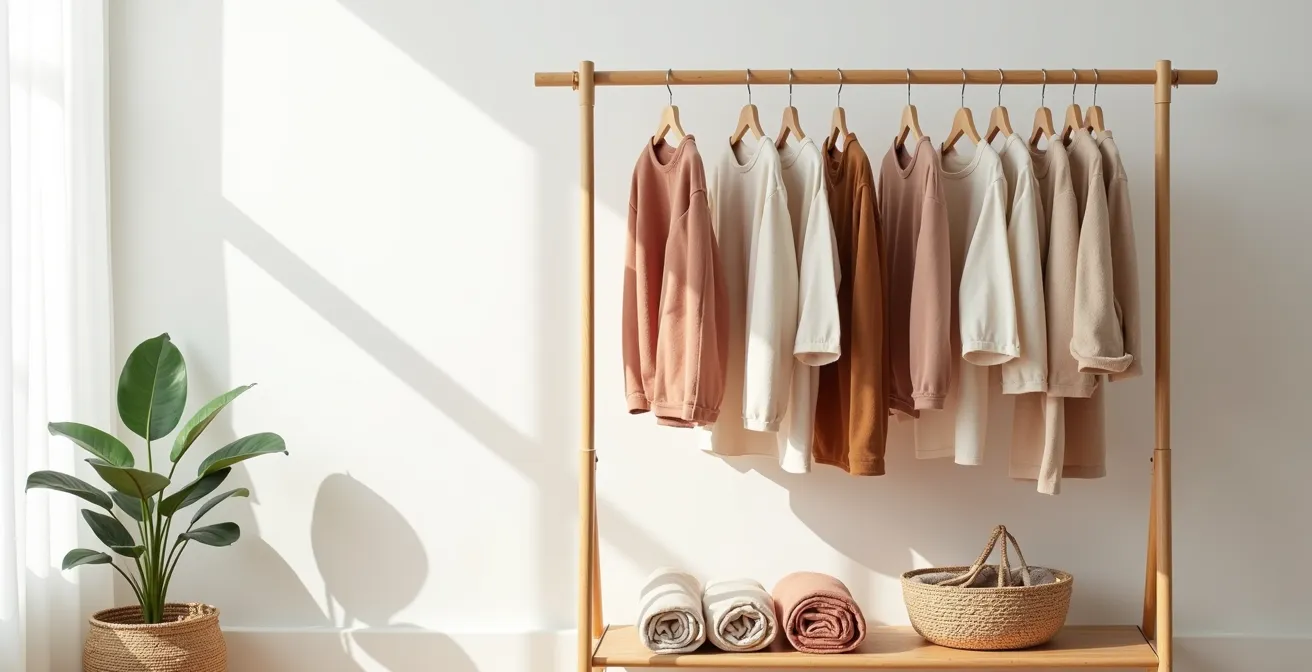
By thinking about a garment’s resale potential at the point of purchase, you fundamentally change your relationship with clothing, moving from a disposable mindset to one of stewardship and value.
The Bottled Water Mistake That Exposes Kids to Microplastics
While the title mentions bottled water, a far more insidious and direct source of microplastic exposure for children comes from their clothing. We’ve touched on recycled polyester, but it’s crucial to understand the sheer scale of this invisible problem. Synthetic fabrics like polyester, nylon, acrylic, and fleece are essentially plastics. With every single wash, these garments shed thousands of microscopic plastic fibers. These fibers flow out with the wastewater, bypass filtration systems, and enter our rivers and oceans. They are then consumed by marine life, accumulating in the food chain and eventually ending up on our plates.
For children, the risk is twofold. They are exposed through the water they drink and the food they eat, but also directly through their clothes. These fabrics are in constant contact with their skin, and the long-term health effects of this exposure are still largely unknown, which is a cause for significant concern among scientists and health experts. A child’s skin is more permeable than an adult’s, making them potentially more vulnerable to any chemicals or particles present in their clothing.
Choosing natural fibers is the most effective way to combat this. Materials like organic cotton, linen, and hemp do not shed microplastics. They are biodegradable and return to the earth at the end of their life. This is not about being perfect, as some items like raincoats or performance sportswear necessarily require synthetic materials. However, for everyday items that make up the bulk of a child’s wardrobe—t-shirts, leggings, pajamas, underwear—making a conscious switch to 100% natural, organic fibers can drastically reduce your family’s microplastic footprint and minimize your child’s direct exposure. It’s a tangible step you can take to protect both their health and the health of our planet.
Key Takeaways
- Vague claims like “eco-friendly” or “Made in Europe” are often greenwashing tactics that hide unethical labor and unsustainable practices.
- GOTS is a holistic certification covering ethics and environment, while Oeko-Tex only tests the final product for harmful substances.
- The “Cost-Per-Wear” of a quality garment is often lower than cheap fast fashion, making it a smarter long-term investment.
Why a £30 Shirt Can Be Cheaper Than a £5 One Over Six Months?
Our brains are wired to see a lower price tag as a better deal. A £5 shirt feels like a win, while a £30 shirt for a rapidly growing child can seem extravagant. This is the logic that fuels the fast-fashion industry, but it’s a financial illusion. To understand the true cost, we need to shift our thinking from “price” to “cost-per-wear” (CPW). The CPW is calculated by dividing the item’s price by the number of times it’s worn. A £5 shirt, made from poor-quality fabric and weak stitching, might only survive 5 washes before it loses its shape, color, or integrity. Its cost-per-wear is £1.00.
A £30 shirt, made from durable organic cotton with reinforced seams, might be worn 50 times or more. Its cost-per-wear is only £0.60. Suddenly, the more expensive shirt is the cheaper option. This calculation doesn’t even account for resale value. The £5 shirt is destined for the landfill, potentially even costing you in disposal time or guilt. The £30 shirt, if cared for, could be resold for £10-15, bringing its true net cost down even further. This simple economic model completely upends the fast-fashion business case.
Buying quality is not about luxury; it’s about long-term financial and ethical intelligence. It requires a patient investment upfront for a greater return in durability, value retention, and peace of mind. The table below illustrates this “true cost” analysis, showing how the initial bargain quickly becomes the more expensive proposition over just a few months.
| Factor | £5 Fast Fashion Shirt | £30 Quality Shirt |
|---|---|---|
| Expected Wears | 5-10 wears | 30-50 wears |
| Cost Per Wear (Initial) | £0.50-£1.00 | £0.60-£1.00 |
| Resale Value | £0 (disposal cost) | £10-15 |
| True Cost Per Wear | £0.50-£1.00 | £0.30-£0.50 |
| Hidden Costs | Frequent shopping time, guilt from disposal, poor fit after washing | Initial investment only |
| 6-Month Total (2 kids) | £20-30 (multiple purchases) | £30 (one purchase, retains value) |
To identify these quality garments in-store, you don’t need to be an expert. You just need to know what to look for. The following checklist gives you a practical framework for auditing a garment’s quality before you buy.
Your 5-Point Quality Audit Checklist
- Check stitch density: Gently pull at the seams. Quality items have tight, even stitching with no visible gaps.
- Examine seam finishes: Look inside the garment for French seams or neatly serged edges that prevent fraying over time.
- Test pattern matching: On well-made clothes, stripes, plaids, and other patterns should align perfectly at the seams.
- Feel fabric weight: For everyday items like t-shirts and trousers, a heavier, more substantial fabric weight usually indicates better durability.
- Inspect hardware quality: Zippers should glide smoothly without catching, and buttons should be securely attached, ideally with reinforcement.
How to Keep Active Kids Cool in Summer Using Organic Cotton?
Now that we have dismantled the common greenwashing tactics and established a framework for choosing quality, let’s apply it to a practical, everyday challenge: keeping your active child comfortable in the summer heat. The best material for the job is, without a doubt, organic cotton. Unlike synthetic fabrics like polyester, which trap heat and moisture against the skin, cotton is highly breathable. It allows air to circulate freely, wicking moisture away from the body and creating a natural cooling effect.
However, not all cotton is the same. The weave of the fabric plays a crucial role in its breathability. For summer, you should look for lighter, looser weaves. A thick, heavy cotton will be less comfortable than a fabric specifically designed for warm weather. Being able to identify these weaves empowers you to select the perfect garment for a hot day at the park or a trip to the beach. Look for labels that specify the type of cotton weave, such as jersey for soft and stretchy t-shirts, or muslin for ultra-lightweight swaddles and blouses. This attention to detail ensures genuine comfort, not just a generic “100% Cotton” tag.
This practical application is the final piece of the puzzle. It brings together the “why” (ethics, environment) with the “how” (quality, material choice) and the “what” (a comfortable, happy child). It is the opposite of the greenwashing approach, which often prioritizes vague claims over tangible benefits. We’ve seen how major brands can be fined for exactly this kind of deception.
Shein Fined for Greenwashing in Europe
An Italian court fined the operator of Shein’s European business €1 million for “greenwashing.” The authority found that its messaging around sustainability and its “evoluSHEIN” collection was vague, generic, and misleading. This included false or confusing claims about recyclability and circularity, proving that even dedicated “eco” lines require intense scrutiny from consumers.
To help you make the best choices for summer, here is a quick guide to the most breathable organic cotton weaves:
- Organic Cotton Jersey: Soft, stretchy, and highly breathable. The go-to choice for active play t-shirts and leggings.
- Muslin: An ultra-lightweight, open-weave fabric that allows for maximum airflow. Perfect for baby swaddles, lightweight blankets, and loose summer tops.
- Cotton Voile: A semi-sheer and crisp fabric that is excellent for layering in the heat or for light summer dresses.
- Poplin: Smooth, durable, and tightly woven but still very thin and breathable. Ideal for structured summer shirts and shorts.
- Seersucker: Its signature puckered texture means less of the fabric touches the skin, which enhances air circulation and creates a natural cooling effect.
Frequently Asked Questions about Greenwashing in Kids’ Fashion
How many microplastic fibers are released per wash?
Every wash of recycled polyester fleece or synthetic clothing releases thousands of microplastic fibers into water systems, which ultimately enter the food chain through water treatment and marine life.
What certifications help avoid microplastic exposure?
Look for NSF/ANSI 401 certification for water filters to remove microplastics from tap water, and choose GOTS-certified organic cotton clothing that doesn’t shed synthetic fibers.
Are ‘recycled’ polyester clothes safer for children?
No – recycled polyester still sheds the same microplastics as virgin polyester. For items against children’s skin, breathable organic cotton remains the healthiest choice.
Your power as a consumer is not in buying “eco-friendly” products, but in demanding transparency and investing in true, demonstrable quality. Start today by applying the 5-point quality check on your next purchase, asking brands tough questions about their supply chain, and prioritizing garments that will last long enough to have a second or third life.