
In summary:
- Stop packing just ‘healthy food’ and start designing a ‘smart lunch’ based on nutritional science and child psychology.
- Prioritize blood-sugar balance over simple carbs to prevent the 2 PM energy crash and keep focus high.
- Use strategic compartmentalization to guide your child towards eating protein and vegetables first.
- Master thermal integrity to make hot foods appealing and cold foods safe, dramatically increasing food acceptance.
- Embrace ‘stealth fortification’ to boost nutrition in favorite foods without triggering suspicion from picky eaters.
The sight of a returned lunchbox, still heavy with the lovingly prepared food you packed hours earlier, is a uniquely frustrating experience for any parent. You’ve tried cutting sandwiches into stars, packing their favorite (supposedly healthy) snacks, and maybe even including a cute note. Yet, the food comes back, and your child comes home tired, cranky, and ravenous. The common advice to “make it colorful” or “involve them in packing” only goes so far when you’re up against a picky eater and a ticking clock.
The cycle of uneaten lunches isn’t just a waste of food; it’s a missed opportunity to fuel your child’s brain and body for a demanding school day. It leaves you wondering what you’re doing wrong and worrying if they’re getting the nutrients they need to learn and grow. But what if the solution wasn’t about finding one magical recipe, but about rethinking the entire system? What if the key was to become a lunchbox architect, designing a meal based on how kids actually think, feel, and eat?
This is where we move beyond the platitudes. The real secret to an empty lunchbox lies in understanding the science of energy, the psychology of a picky eater, and the strategy of preparation. It’s about building a meal that works *with* your child’s natural tendencies, not against them. This guide will deconstruct the process, providing a blueprint for a lunch that not only gets eaten but also powers your child for success in the classroom and beyond.
In this article, we will explore the strategic pillars of lunchbox architecture. We will cover everything from the science of blood sugar and the logistics of temperature control to clever hacks for boosting nutrition and organizing a stress-free morning routine. Let’s build a better lunch, together.
Summary: The Blueprint for an Empty Lunchbox
- Why White Bread Sandwiches Cause 2 PM Classroom Fatigue?
- How to Keep Hot Food Hot and Cold Food Cold Until 12:00?
- Batch Cooking vs. Daily Prep: Which Strategy Saves More Morning Stress?
- The “Healthy” Fruit Snack Mistake That Has More Sugar Than Candy
- In What Order Do Kids Eat? Packing Strategy for Maximum Protein Intake
- The “Snooze Button” Habit That Guarantees a Chaotic Morning
- How to Fortify Mac and Cheese with Pureed Veggies Without Getting Caught?
- How to Get Enough Omega-3s Into a Child Who Hates Fish?
Why White Bread Sandwiches Cause 2 PM Classroom Fatigue?
That classic white bread sandwich, a seemingly harmless lunchbox staple, is often the secret culprit behind the dreaded 2 PM slump. The issue lies in its high glycemic index (GI). Foods like white bread are made from highly refined flour, which the body converts into sugar almost instantly. This causes a rapid spike in blood sugar, followed by an equally dramatic crash. For a child in a classroom, this crash manifests as fatigue, irritability, and an inability to focus just when they need their brainpower the most.
This isn’t just theory; it’s backed by science. For instance, compelling research has shown that children who eat a low-GI meal exhibit better cognitive performance. One study found that a low-GI breakfast resulted in a 9% improvement in response times on complex cognitive tasks compared to a high-GI breakfast. This highlights how crucial stable blood sugar is for learning. The goal of nutritional architecture is to build a lunch that provides sustained energy, not a short-lived sugar rush.
To build a healthier sandwich that provides lasting fuel, focus on three key elements: whole grains, protein, and fiber. The healthiest sandwich for a child is one built on 100% whole-grain bread (with at least 3g of fiber per slice), layered with a quality protein source like turkey or hummus, and packed with fiber-rich vegetables like spinach or shredded carrots. This combination slows down digestion, ensuring a steady release of energy that keeps them alert all afternoon.
- Swap White for Whole Grain: Choose bread, wraps, or crackers that list “whole wheat” or “whole grain” as the first ingredient.
- Add a Protein Anchor: Include lean meats, cheese, eggs, beans, or nut butters to stabilize blood sugar.
- Include Fiber-Rich Veggies: Lettuce, cucumber, bell peppers, and tomatoes add crunch, nutrients, and essential fiber.
- Balance Macronutrients: Aim for a lunch that is roughly 30% protein, 40% complex carbohydrates, and 30% healthy fats to optimize energy.
By making these simple swaps, you transform the sandwich from an energy drain into a powerhouse of concentration. It’s the first and most fundamental step in designing a lunch that works for your child, not against them.
How to Keep Hot Food Hot and Cold Food Cold Until 12:00?
A lukewarm soup or a warm, sweaty yogurt is a guaranteed way to have a lunchbox returned untouched. The thermal integrity of a meal is non-negotiable for food appeal and, more importantly, for food safety. Bacteria thrive in the “danger zone” between 40°F and 140°F (4°C and 60°C), so keeping hot foods hot and cold foods cold is a critical design principle for any lunchbox architect.
The key is investing in the right equipment and using it correctly. A high-quality, wide-mouthed, vacuum-insulated thermos is your best friend for hot meals like pasta, chili, or soup. To maximize its effectiveness, you must “prime” it: fill it with boiling water, seal it, and let it sit for 5-10 minutes before emptying it and adding the piping hot food. This preheats the steel, ensuring the contents stay hot for hours.
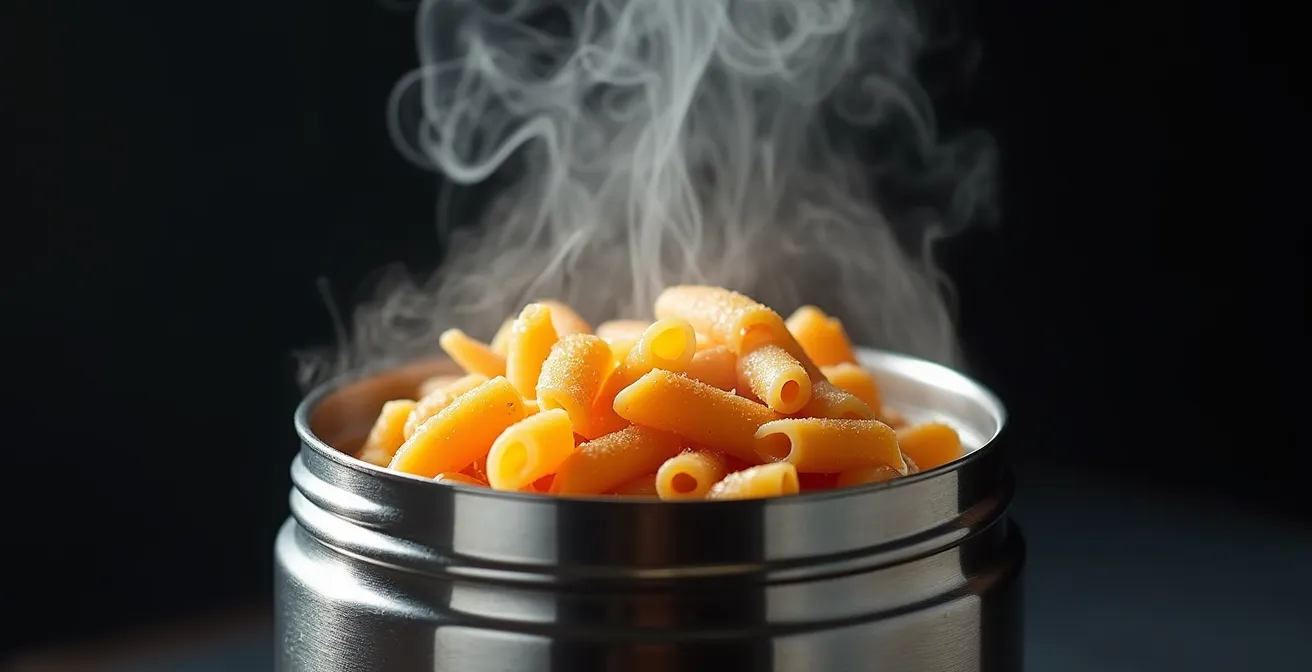
For cold items, a combination of an insulated lunch bag and gel packs is essential. Place one gel pack at the bottom and another on top of the food containers to create a “cold sandwich” effect. You can also freeze items like yogurt tubes or juice boxes to act as edible ice packs. Furthermore, to prevent sogginess, always pack wet ingredients (like dressing or juicy fruits) in separate, leak-proof containers away from dry items like crackers or sandwiches.
This comparative table, based on guidance from a recent Mayo Clinic guide, breaks down the best methods for temperature control.
| Method | Temperature Range | Duration | Best For |
|---|---|---|---|
| Pre-heated Thermos | 140°F+ | 5-6 hours | Soups, pasta, hot meals |
| Frozen Gel Packs | 32-40°F | 4-5 hours | Dairy, meat, cut fruits |
| Frozen Food Items | 32-40°F | 3-4 hours | Yogurt tubes, juice boxes |
| Insulated Lunch Box | 50-60°F | 3-4 hours | Sandwiches, whole fruits |
Mastering temperature control opens up a whole new world of lunch possibilities beyond the simple sandwich, dramatically increasing the variety you can offer and the likelihood that your child will find their meal appealing at noon.
Batch Cooking vs. Daily Prep: Which Strategy Saves More Morning Stress?
The chaotic morning rush is the enemy of a well-packed lunch. When you’re scrambling to get everyone out the door, it’s easy to default to pre-packaged, less-nutritious options. The debate between batch cooking on the weekend versus preparing fresh each day is common, but the most effective strategy for most families is actually a hybrid approach. This method combines the efficiency of batch prep with the freshness of daily additions, minimizing morning stress while maximizing food appeal.
The core of the hybrid model is to batch-prepare the time-consuming components on a Sunday. This could include:
- Cooking a large batch of a staple grain like quinoa or brown rice.
- Grilling chicken strips or making a big batch of hard-boiled eggs.
- Washing and chopping sturdy vegetables like carrots, bell peppers, and broccoli.
- Mixing homemade dips like hummus or yogurt ranch.
These components can be stored in airtight containers, ready to be assembled. Then, each morning (or even the night before), the only task is to quickly assemble the bento box, adding fresh, quick-to-spoil items like berries, sliced avocado, or cheese cubes.
Case Study: The Hybrid Hub Method
A registered dietitian mom documented her hybrid approach over one month. She batch-prepped proteins and grains on Sundays while adding fresh elements daily. This method reduced her average morning prep time from a stressful 15 minutes to a manageable 5 minutes. Crucially, by involving her son in the quick nightly assembly of his bento box from the prepped components, his lunch consumption increased by 40%, proving that efficiency and food acceptance can go hand-in-hand.
This strategy transforms lunch packing from a daily creative burden into a quick, assembly-line process. It provides the structure needed to ensure a balanced meal is always on hand without sacrificing the freshness that makes food appetizing to a child.
The “Healthy” Fruit Snack Mistake That Has More Sugar Than Candy
Navigating the snack aisle is like walking through a minefield of misleading health claims. Products marketed as “made with real fruit,” “organic,” or “all-natural” can create a health halo, convincing parents they’re making a good choice. However, many of these fruit snacks, gummies, and leather strips are nothing more than candy in disguise, packed with more added sugar than actual candy and contributing directly to the energy rollercoaster we aim to avoid.
The numbers are stark. A close look at nutrition labels reveals that many popular fruit snacks contain 11-13g of added sugar per serving, which is equivalent to about three teaspoons. The main ingredients are often fruit juice concentrate, corn syrup, and various forms of sugar—not the whole fruit fiber and water that make real fruit healthy. This sugar bomb provides a quick burst of energy followed by the inevitable crash, undermining the balanced meal you’ve worked so hard to pack.
The real solution is to swap these processed snacks for whole-food alternatives. Whole fruits like berries, apple slices, and clementines provide fiber that slows sugar absorption. Other fantastic options include homemade energy balls sweetened with dates, plain yogurt with a swirl of real fruit puree, or even frozen grapes, which kids often perceive as a special treat. Becoming a sugar detective is a key skill for any lunchbox architect.
Your Checklist: How to Identify Hidden Sugars in ‘Healthy’ Snacks
- Check the first 3 ingredients: If sugar, corn syrup, or fruit juice concentrate are listed near the top, it’s a major red flag.
- Find the ‘Added Sugars’ line: On the nutrition label, aim for products with less than 6g of added sugars per serving.
- Visualize the sugar: Compare the total sugar grams to a teaspoon (which is 4g) to understand the real quantity.
- Ignore misleading front-of-package claims: Terms like ‘made with real fruit’ or ‘organic’ do not guarantee a low sugar content.
- Choose whole or homemade: Prioritize whole fruit, or make your own alternatives like date-sweetened energy balls or frozen grapes.
By learning to spot these sugar traps and opting for naturally sweet, fiber-rich foods, you protect your child’s energy levels and teach them what truly healthy food looks and tastes like.
In What Order Do Kids Eat? Packing Strategy for Maximum Protein Intake
Have you ever noticed that when kids open their lunchbox, their eyes—and hands—immediately go to the crackers, the fruit, or the small treat? They often eat the “fun stuff” first, and by the time they get to the protein and vegetables, the short lunch period is over. This is a natural tendency, but a lunchbox architect can use strategic compartmentalization to gently guide a child’s eating order and ensure they consume the most important nutrients first.
The principle is simple: place the high-protein, high-fiber foods in the largest, most accessible compartment of the bento box. This makes them the default starting point. Protein is the most satiating macronutrient; it stabilizes blood sugar and builds the foundation for sustained energy and focus. By encouraging your child to eat it first, you ensure they get the biggest nutritional bang for their buck before they fill up on carbs.
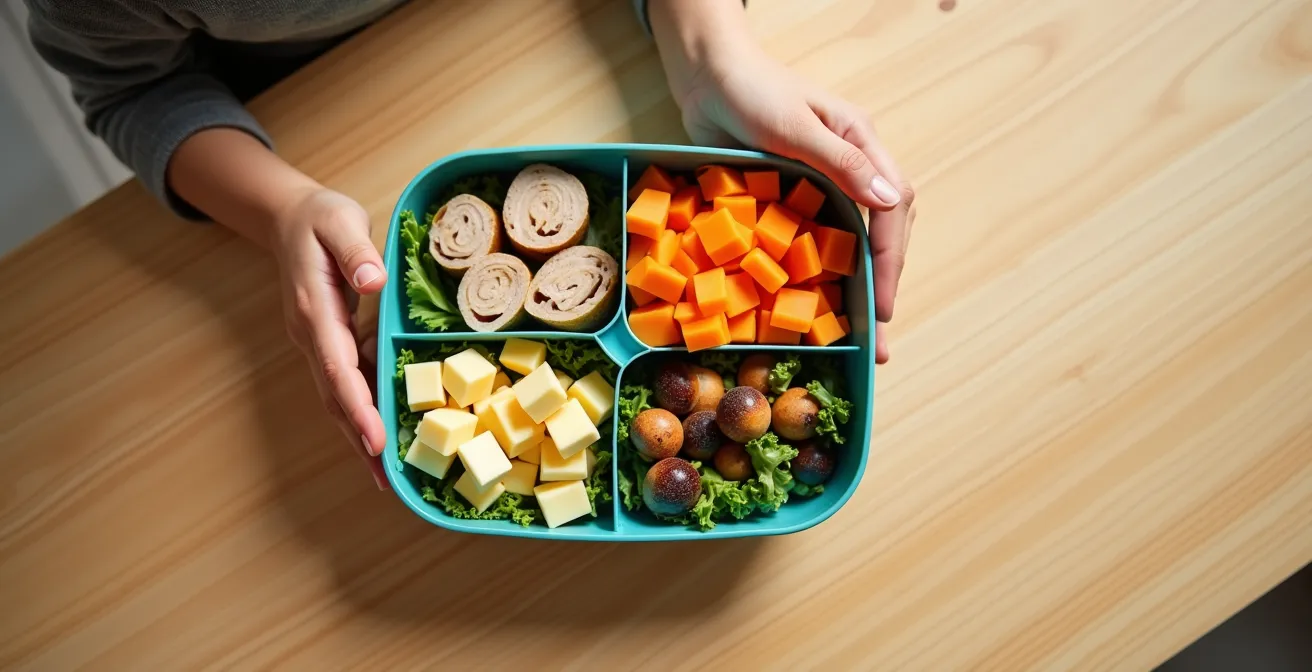
Think of it as creating a visual and physical hierarchy. The “main event”—like grilled chicken strips, a hard-boiled egg, or a pile of edamame—should be front and center. The complex carbs (like whole-grain crackers or pasta) and fruits can be placed in smaller, secondary compartments. A tiny, well-portioned treat can be tucked away in the smallest, hardest-to-reach spot, serving as a final reward rather than the main attraction.
Protein is the anchor of every lunchbox I pack — it’s what helps keep my kids focused through the afternoon slump.
– Registered Dietitian and mother, Mother.ly nutrition article
This strategy doesn’t forbid fun foods; it simply reframes the meal’s structure to prioritize nutrient density. It’s a subtle but powerful psychological hack that works with a child’s natural grazing habits to achieve your nutritional goals.
The “Snooze Button” Habit That Guarantees a Chaotic Morning
The battle for an empty lunchbox doesn’t start at the prep counter; it starts with the morning alarm. Hitting the snooze button, even just once, can set off a chain reaction of stress and chaos that directly impacts what your child eats—and if they eat at all. A rushed morning means less time for a proper breakfast, which makes them hungrier sooner, and less mental bandwidth for you to pack a thoughtful, appealing lunch. Morning stress can even decrease a child’s appetite, making them less likely to eat the food you’ve packed.
This is amplified by modern school schedules. With lunch hour in many public schools having shrunk to just 15 minutes, there is zero room for hesitation. A child who arrives at school feeling flustered and rushed is less likely to settle down and eat a proper meal in the limited time available. A calm, organized morning, on the other hand, sets a positive tone for the entire day, promoting a better appetite and a greater willingness to eat.
The most powerful antidote to morning chaos is creating a “launch pad” system the night before. This is a designated spot by the door where everything needed for the next day is placed, ready to go. This simple organizational hack eliminates last-minute searching and decision-making, which are the primary sources of morning stress.
Case Study: The ‘Launch Pad’ System
In an informal study, families who implemented a ‘launch pad’ station by the door—placing completed backpacks, filled water bottles, and fully packed lunches in one spot the night before—reported a 75% reduction in perceived morning stress. One family documented that this simple change completely eliminated morning decision-making and reduced their departure scramble from 20 minutes to a calm 5 minutes. The key was making it a non-negotiable part of the evening routine.
By front-loading the work to the calmer evening hours, you free up your morning to focus on what matters most: connecting with your child and sending them off to school feeling peaceful, prepared, and ready to learn.
How to Fortify Mac and Cheese with Pureed Veggies Without Getting Caught?
For many parents of picky eaters, the list of accepted foods can be painfully short. Mac and cheese is often on that list. Instead of fighting a losing battle, the savvy lunchbox architect uses this as an opportunity for stealth fortification. By blending in nutrient-dense vegetables, you can dramatically boost the nutritional value of a favorite dish without altering its taste, texture, or color enough to raise suspicion.
The secret to success is twofold: color matching and achieving a perfectly smooth texture. Blending orange vegetables like pureed carrots, butternut squash, or sweet potato into a cheese sauce is virtually undetectable. Similarly, pureed white cauliflower or cannellini beans can disappear into creamy sauces, mashed potatoes, or even yogurt-based dips. The key is to steam the vegetables until they are exceptionally soft before blending them into a silky-smooth puree.
Start small. Begin by adding just one or two tablespoons of puree per serving, and gradually increase the amount over several weeks as your child becomes accustomed to it. An immersion blender is your best tool for this mission, as it allows you to blend the puree directly into the sauce, eliminating any lumps that might give your secret away.
After weeks of lunch returning untouched, I started adding pureed butternut squash to mac and cheese. My 7-year-old never noticed the difference, and now eats the entire portion. The key was matching the orange color perfectly and using an immersion blender to achieve a completely smooth texture. We’ve gradually increased from 2 tablespoons to half a cup per serving.
– Parent, MyFussyEater.com
This strategy isn’t about deception; it’s about meeting your child where they are. It ensures they get vital nutrients while slowly expanding their palate in a low-pressure way. It’s a win-win that fills their belly and eases your mind.
Key Takeaways
- The key to an empty lunchbox is not just packing healthy food, but designing a meal that works with your child’s energy needs and eating psychology.
- Balancing blood sugar with protein, fiber, and complex carbs is more important than any single food item for preventing afternoon fatigue and maintaining focus.
- Strategic preparation, from temperature control to a hybrid prep model, removes stress and dramatically expands the variety of foods your child will accept.
How to Get Enough Omega-3s Into a Child Who Hates Fish?
You know Omega-3 fatty acids are crucial for your child’s brain development, focus, and overall health. But what if your child runs from fish like it’s the plague? For many families, this is a major nutritional hurdle. Thankfully, fish is not the only source of these essential fats. By understanding the different types of Omega-3s and where to find them, you can easily fortify your child’s diet without a single fish stick.
There are three main types of Omega-3s: EPA, DHA, and ALA. EPA and DHA are the powerhouse fats found primarily in fatty fish and are most directly linked to brain health. ALA is found in plant sources and can be converted by the body into EPA and DHA, although the conversion rate is low. A smart strategy involves incorporating both plant-based ALA sources and direct, fish-free sources of EPA/DHA.
Kid-friendly, non-fish sources are more common than you think. Ground flaxseed and hemp hearts (ALA) can be sprinkled invisibly into oatmeal, smoothies, or yogurt. Omega-3 fortified eggs (DHA/EPA) look and taste like regular eggs but provide a significant brain boost. And for a guaranteed dose, high-quality algae oil supplements—the original source from which fish get their Omega-3s—are available in pleasant-tasting liquid or gummy forms.
This table, drawing from an analysis from BrainMD, offers a clear guide to fish-free Omega-3 sources.
| Source | Type of Omega-3 | Amount per Serving | Kid-Friendly Ideas |
|---|---|---|---|
| Omega-3 Fortified Eggs | DHA/EPA | 100-150mg | Scrambled, hard-boiled for lunch |
| Ground Flaxseed | ALA | 2,300mg per tbsp | Mix into oatmeal, smoothies |
| Hemp Hearts | ALA | 2,800mg per 3 tbsp | Sprinkle on yogurt, cereal |
| Algae Oil Supplement | DHA/EPA | 200-400mg | Liquid or gummy form |
| Grass-Fed Dairy | Small amounts DHA/EPA | 20-30mg per serving | Milk, yogurt, cheese |
By creatively incorporating these diverse sources into meals and snacks your child already enjoys, you can ensure they receive the critical brain-building nutrients they need, no fishy battles required.
Frequently Asked Questions About Lunch Prep Strategies
How long do batch-prepped components stay fresh?
When stored correctly in airtight containers in the refrigerator, cooked grains like rice or quinoa will last for 4-5 days, cooked proteins such as grilled chicken or beef last 3-4 days, and chopped hard vegetables like carrots or bell peppers can last up to 5 days.
What’s the minimum batch prep needed to save time?
Even minimal prep can have a huge impact. According to meal prep experts, preparing just the protein sources (e.g., grilling chicken) and one staple grain (e.g., cooking a pot of quinoa) for the week can cut your morning prep time by 50-70%.
How can I involve kids in packing without adding more time and stress?
The key is to do it the night before and create a “lunch bar.” Set out the prepped components in an assembly line on the counter and let children choose and pack their own bento boxes. This adds only 2-3 minutes to the evening routine but gives them a sense of ownership that makes them more likely to eat the food.