
The key to helping a fussy eater is not hiding vegetables or forcing bites; it’s understanding the biology of why they refuse certain foods.
- Much of what we label “picky eating” is a normal developmental stage called food neophobia, an instinct to avoid the unknown.
- Pressuring a child to “clean their plate” can disrupt their natural hunger cues and create long-term food anxiety.
Recommendation: Shift your goal from getting your child to eat to simply getting them to experience food through all their senses, building trust without pressure.
You know the feeling: you’ve spent an hour crafting a beautiful, healthy meal, only to have it met with a turned-up nose and a firm “no.” The frustration is real, and it often leads parents down a rabbit hole of well-meaning but incomplete advice. You’ve probably heard it all: “just keep offering it,” “make the food look like a smiley face,” or “hide the broccoli in the brownie.” While these tips can sometimes help, they often miss the root of the problem and treat mealtime like a battle of wills to be won.
But what if the issue isn’t your child’s stubbornness, but a deeply ingrained biological survival instinct? What if our best intentions, like insisting on a “clean plate,” are actually making things worse in the long run? The truth is, transforming a fussy eater’s diet is less about clever tricks and more about a patient, strategic process. It involves understanding your child’s biology, de-escalating food-related anxiety, and systematically rebuilding their trust in new culinary experiences.
This guide moves beyond simple tips to explain the science behind picky eating. We will explore the “why” behind your child’s behavior—from the biological normality of rejecting green foods to the neurological impact of a sugar crash. Then, we will equip you with the strategic “how”: practical, low-pressure techniques to expand their palate, fortify their favorite meals, and foster a healthy, lifelong relationship with food.
Summary: A Strategic Guide to Nourishing Your Fussy Eater
- Why Sugar Crashes Are Causing Your Child’s After-School Meltdowns?
- How to Fortify Mac and Cheese with Pureed Veggies Without Getting Caught?
- Organic vs. Conventional: Which Fruits Are Worth the Extra Cost?
- The “Clean Plate” Mistake That Causes Eating Disorders Later in Life
- When to Serve Protein: The Best Snack Timing for Sustained Focus
- Why Being in the 50th Percentile Is Perfectly Healthy?
- Why It Is Biologically Normal for 2-Year-Olds to Reject Green Foods?
- How to Expand a Picky Eater’s Palate Without Forcing Bites?
Why Sugar Crashes Are Causing Your Child’s After-School Meltdowns?
That familiar late-afternoon meltdown might not just be about tiredness; it could be a direct result of their snack choice. When a child consumes sugary or high-carbohydrate snacks, their body experiences a rapid-fire sequence of events. First, the sugar activates the brain’s reward center, releasing dopamine and creating a sensation of pleasure and a quick energy surge. This feels great in the moment, but it’s short-lived. The body responds by releasing a flood of insulin to bring blood sugar levels down.
This is where the “crash” happens, typically 45 to 90 minutes after eating. As blood sugar plummets, the initial euphoria gives way to irritability, mood swings, fatigue, and difficulty concentrating. For a child, this physiological turmoil often manifests as a full-blown meltdown. Their brain and body are sending distress signals because their primary fuel source has been depleted too quickly. In fact, research increasingly shows that children consuming high carbohydrates and refined sugar exhibit more behavioral problems.
This cycle does more than just cause temporary moodiness. Repeated spikes and crashes can impair cognitive function and memory, making it harder for kids to learn and retain information. Over time, the brain begins to crave that initial dopamine hit, leading to a preference for high-stimulation, sugary foods and an aversion to more complex, nutrient-dense options that provide stable, long-lasting energy. Understanding this cycle is the first step toward preventing it with more balanced snack choices.
How to Fortify Mac and Cheese with Pureed Veggies Without Getting Caught?
The “hide the veggies” tactic is popular for a reason, but it’s most effective when used as a strategic first step, not a permanent solution. The goal isn’t just to sneak in nutrients; it’s to build a bridge from an accepted food to a new one. This technique, known as “food bridging,” helps a child’s palate adapt to new flavors and textures gradually. Start with vegetables that are mild in flavor and similar in color to the base dish. For a creamy pasta like mac and cheese, pureed cauliflower, butternut squash, or white beans are excellent choices as they blend in seamlessly without altering the color or taste significantly.
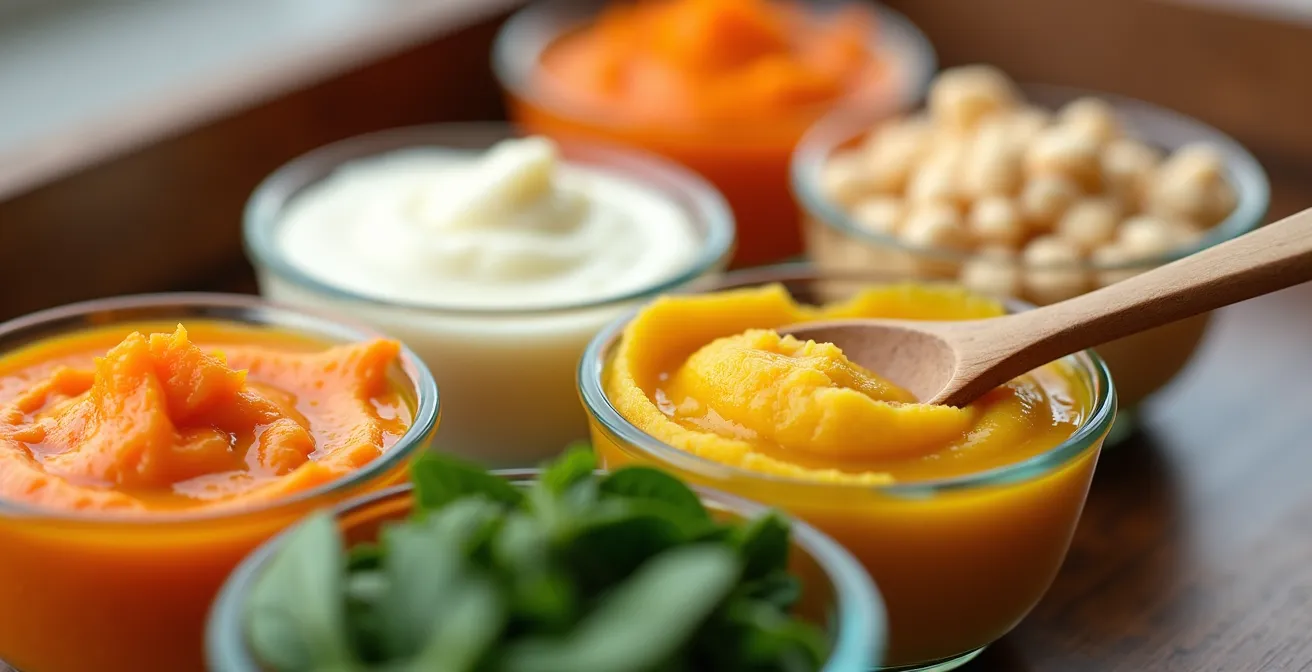
As this image shows, preparing a variety of smooth purees ahead of time makes fortification easy. Begin by adding a small amount, like one or two tablespoons, into the entire batch. Once your child consistently accepts the fortified version, you can gradually increase the amount or start using a slightly more flavorful puree, like carrot. The key is to make the change so subtle they don’t notice.
The final step in food bridging is to move from hidden to visible. After weeks of accepting the fortified dish, try serving a tiny, finely mashed piece of the same vegetable on the side. You might say, “This is the squash that makes your mac and cheese so creamy!” This connects the pleasant experience with the vegetable itself, slowly dismantling the fear of the unknown. It transforms the strategy from a covert operation into an open and trusting learning experience.
Organic vs. Conventional: Which Fruits Are Worth the Extra Cost?
The debate between organic and conventional produce can be a significant source of stress for parents, especially when dealing with a fussy eater whose diet is already limited. The good news is that providing a variety of fruits and vegetables is far more important than whether they are organic or not. However, if your budget allows for selective organic purchasing, a strategic approach can maximize your investment. The key factor is the thickness of the produce’s skin, as this determines how many pesticides may be absorbed into the part your child eats.
To help prioritize, you can think of produce in different categories, as outlined in an analysis of pesticide exposure. This allows you to focus your organic budget where it matters most while confidently buying conventional for other items.
| Priority Level | Produce Type | Reasoning | Recommendation |
|---|---|---|---|
| High Priority Organic | Thin-skinned fruits (strawberries, peaches) | Edible skin absorbs more pesticides | Worth the extra cost if budget allows |
| Medium Priority | Leafy greens, bell peppers | Large surface area exposed | Consider organic when on sale |
| Low Priority | Thick-peeled fruits (bananas, pineapples) | Peel is discarded, less exposure | Conventional is fine |
| Flexible Choice | Frozen vegetables | Processing reduces some residues | Either option provides nutrition |
Ultimately, the goal is to get nutrients into your child. A conventionally grown apple is infinitely better than no apple at all. Don’t let the pressure to buy everything organic prevent you from offering a wide range of healthy options. Use this framework as a guide, not a rigid rule, and remember that washing all produce thoroughly is a crucial step regardless of how it was grown.
The “Clean Plate” Mistake That Causes Eating Disorders Later in Life
Many of us grew up hearing “Finish everything on your plate!” It was said with the best of intentions, meant to ensure we were well-fed and didn’t waste food. However, pediatric experts now widely recognize that this practice can have serious, long-term negative consequences. Forcing a child to eat when they are not hungry teaches them to ignore their own internal signals of satiety and fullness. This disconnect can set the stage for disordered eating patterns, such as overeating or restrictive behaviors, later in life.
The most effective and respectful approach is the “Division of Responsibility” in feeding. This concept, championed by feeding experts, is simple yet profound. As the American Academy of Pediatrics advises, it establishes clear and healthy boundaries around food.
It’s good for children to learn to listen to their bodies and use hunger as a guide. It’s a parent’s responsibility to provide food, and the child’s decision to eat it.
– American Academy of Pediatrics, 10 Tips for Parents of Picky Eaters
Adopting this mindset is liberating. Your job is to decide *what* food is served, *when* it’s served, and *where* it’s served. Your child’s job is to decide *whether* to eat and *how much* to eat from what you have provided. This means if they eat everything, a little, or nothing at all, you have still done your job successfully. By consistently respecting their autonomy, you build trust, reduce mealtime anxiety, and empower them to develop a healthy, intuitive relationship with food that will serve them for a lifetime.
When to Serve Protein: The Best Snack Timing for Sustained Focus
Just as sugary snacks can trigger meltdowns, strategically timed protein snacks can promote calm and concentration. Unlike simple carbohydrates that cause rapid energy spikes and crashes, protein is digested more slowly, providing a steady release of energy to the brain and body. This metabolic stability is the key to sustaining focus for activities like homework, reading, or even just navigating the challenging late-afternoon hours without a tantrum.
When a child is feeling irritable or “hangry,” it’s a sign their blood sugar is low. A protein-and-fat combination is the ideal antidote. The protein helps stabilize blood sugar, while the healthy fat provides satiety, keeping them feeling full and content for longer. This is a far more effective strategy than offering a carbohydrate-heavy snack like crackers or a granola bar, which can restart the sugar crash cycle.
Matching the snack to the situation can make a world of difference in your child’s mood and performance. Here are some examples of well-timed, protein-rich snacks:
- After-School Stabilizer: Hummus with carrot and cucumber sticks. It provides protein and fiber to bridge the gap until dinner.
- Pre-Homework Power-Up: Apple slices with peanut or almond butter. The combination of fiber from the apple and protein/fat from the nut butter offers sustained energy for concentration.
- Post-Sports Recovery: Greek yogurt with a handful of berries. The protein aids in muscle repair, and the yogurt’s probiotics support gut health.
- Cranky-Hour Calmer: A hard-boiled egg or a cheese stick. They are quick, easy, and deliver a pure protein hit to quell irritability.
Why Being in the 50th Percentile Is Perfectly Healthy?
In a world of data and comparisons, it’s easy for parents to get fixated on growth chart percentiles. Seeing your child in the 25th percentile for weight while their peer is in the 75th can spark anxiety. But from a pediatric perspective, a single percentile number is just a snapshot in time; it’s almost meaningless on its own. The 50th percentile simply means that 50% of healthy children of the same age and sex are bigger and 50% are smaller. It’s the average, not a grade.
What pediatricians truly care about is not the number itself, but the consistency of the growth curve. A child who is consistently tracking along their own 30th percentile curve is demonstrating healthy, predictable growth. This is far more reassuring than a child who jumps erratically from the 70th percentile to the 40th and back up again. Every child has their own genetically predetermined growth pattern. The goal is for them to follow their unique path steadily.
It’s also important to understand the normal range. According to CDC growth chart standards, a child falling anywhere between the 5th and 95th percentile is generally considered to be within a healthy range. What matters is that they are gaining weight and height at an appropriate and consistent rate for them. So, unless your child experiences a sudden drop across two or more percentile lines or has other concerning symptoms, you can take a deep breath. Their percentile is likely just a reflection of their own unique, healthy body.
Why It Is Biologically Normal for 2-Year-Olds to Reject Green Foods?
If your toddler suddenly starts rejecting foods they used to love, especially vegetables, you are not alone. This behavior, often peaking between ages 2 and 6, is a normal developmental stage known as food neophobia—the fear of new foods. While it can be incredibly frustrating for parents, it’s a hardwired evolutionary survival mechanism. From an evolutionary standpoint, when a toddler becomes mobile, their instinct is to be wary of putting unknown things in their mouth. Bitter flavors, which are common in many green vegetables, were often a natural warning sign for poisonous plants.
Your child isn’t being “bad” or “defiant”; they are acting on a primal instinct to protect themselves. Their world is expanding rapidly, and being cautious about what they consume is a part of how they learn to navigate it safely. This skepticism is especially strong for combination foods like casseroles or stews, where individual ingredients are not easily identifiable. A plate of separated, recognizable items is often far less threatening to a neophobic child.
Understanding that this is a normal, temporary phase can radically shift your perspective. It moves the goalpost from “getting them to eat broccoli today” to “patiently and repeatedly exposing them to broccoli in a low-pressure environment for the next few years.” Research shows that it can take 15-20 positive exposures for a child to accept a new food. Framing their rejection as biology, not behavior, allows you to respond with patience and strategy instead of frustration and pressure, which is the key to eventually overcoming this phase.
Key Takeaways
- Picky eating is often a normal biological phase (neophobia), not defiance.
- Your role is to provide healthy food; it’s your child’s role to decide how much (or if) to eat.
- Focus on low-pressure sensory exploration (touch, smell) before tasting to build trust with new foods.
How to Expand a Picky Eater’s Palate Without Forcing Bites?
Once you’ve embraced the Division of Responsibility and understand the biology of neophobia, you can begin the practical work of expanding your child’s palate. The most effective method is to lower the stakes entirely by shifting the goal from “tasting” to “exploring.” Turn mealtime into a sensory science lab. Encourage your child to interact with a new food using their other senses first. Ask questions like, “What does it sound like when you tap it?” or “Is it squishy or firm when you squeeze it gently?” This no-pressure interaction makes the food familiar and less threatening.
Progress to smell exploration (“Does it smell sweet or earthy?”) and then introduce the idea of a “learning lick,” where they can just touch it with their tongue without any expectation of swallowing. Crucially, you must allow them to spit the food into a napkin if they don’t like the taste. This gives them full control and removes the fear of being trapped into eating something unpleasant. While it may feel counterintuitive, this process builds immense trust and curiosity. While most picky eating is normal, it’s vital to recognize when the issue may require professional help. The following guide, based on insights from sensory health experts, can help you distinguish typical fussiness from a more significant feeding problem.
This comparative guide can help you identify if your child’s behavior is typical or warrants a discussion with your pediatrician, as explained by a guide for identifying feeding problems.
| Behavior Category | Normal Picky Eater | Problem Feeder (Seek Help) |
|---|---|---|
| Number of Foods Accepted | 30+ different foods | Fewer than 20 foods accepted |
| Food Group Avoidance | Dislikes some items in each group | Avoids all foods of a specific texture or entire nutrition group |
| Reaction to New Foods | Reluctant but can tolerate on plate | Gets very upset when any new foods are presented |
| Physical Symptoms | None | Frequent choking, gagging, or coughing during meals |
| Growth Pattern | Following consistent curve | Ongoing poor weight gain, dropping percentiles |
Your 5-Step Audit for a Pressure-Free Mealtime
- Points of Contact: List all situations where food is offered (e.g., family table, snacks in the car, at daycare). Identify where the most tension occurs.
- Collect Language: For three days, write down the exact phrases you use to encourage eating (e.g., “Just one more bite,” “Good job eating your carrots!”).
- Check for Coherence: Compare your list of phrases to the “Division of Responsibility” principle. Do your words support providing or pressuring?
- Emotional Audit: Note the moments of joy or calm during meals versus moments of tension. What was the trigger for each?
- Integration Plan: Choose one common “pressure phrase” from your list and replace it with a neutral alternative (e.g., swap “Finish your chicken” with “You can be all done when your tummy feels full”).
Transforming your family’s relationship with food is a marathon, not a sprint. Begin today by choosing just one strategy from this guide to implement—whether it’s swapping a sugary snack for a protein-rich one, letting go of the “clean plate” rule, or simply allowing your child to spit out a new food. Each small, consistent step builds trust and lays the foundation for a lifetime of healthy, happy eating.