The key to a toxin-free nursery isn’t just buying “natural” fabrics, but understanding how chemicals are used in textiles and prioritizing what to replace first for maximum impact.
- A baby’s skin is uniquely vulnerable, absorbing chemicals more readily than an adult’s.
- Labels like “bamboo” or “plant-based” can be misleading; many are chemically-intensive rayon fabrics.
- U.S. law allows flame retardant chemicals in loose-fitting pajamas but not in snug-fitting alternatives.
Recommendation: For the greatest reduction in chemical exposure, focus your budget and effort on GOTS-certified organic cotton for items with the most skin contact: the crib mattress, sheets, and pajamas.
As a concerned parent, creating a safe, nurturing sanctuary for your baby is your highest priority. You meticulously research car seats, baby-proof every outlet, and choose the purest ingredients for their first foods. But when it comes to the fabrics that touch their delicate skin for hours every day, the path becomes confusing. The advice is often a bewildering mix of “buy organic,” “avoid synthetics,” and a long list of certifications that feel impossible to decode. You are left wondering if you are doing enough, or if you are missing a critical piece of the puzzle.
The common approach of simply trying to buy “all-natural” everything can be both expensive and ineffective. Many well-intentioned parents fall into the trap of believing that anything plant-based is inherently safe, or that a single certification label guarantees total purity. This overlooks the complex reality of modern textile production, where raw materials are often subjected to harsh chemical processes to become the soft fabrics we see on store shelves. The real danger isn’t just in the raw materials, but in the invisible finishes, dyes, and treatments applied to them.
What if the most protective strategy wasn’t about a complete overhaul, but about targeted, informed decisions? This guide shifts the focus from a generic shopping list to a deeper understanding of risk. We will explore the science behind why your baby’s skin is so absorbent, decode the regulatory loopholes that allow chemicals into clothing, and debunk the myths around popular “natural” fabrics. Most importantly, you will learn a priority-based system to effectively reduce your baby’s toxic load without breaking your budget, empowering you to build a nursery that is not just beautiful, but truly a safe haven.
This article will provide a clear roadmap to navigating the world of baby textiles. The following sections break down the essential knowledge you need, from understanding the science of skin absorption to building a practical, non-toxic wardrobe for your little one.
Summary: Your Guide to Safer Nursery Fabrics
- Why Babies Absorb More Chemicals Through Skin Than Adults?
- How to Avoid Flame Retardants in Pajamas Without Breaking the Law?
- Bamboo vs. Cotton: Which Process Uses Less Harsh Chemicals?
- The “Natural” Mistake: Why Plant-Based Doesn’t Mean Spray-Free?
- What to Replace First: Prioritizing Sheets and Underwear Over Outerwear
- Why Formaldehyde in Clothing Finishes Causes Itching?
- Where to Place Study Zones to Encourage Both Focus and Relaxation?
- How to Build a Kids’ Capsule Wardrobe That lasts a Full Season?
Why Babies Absorb More Chemicals Through Skin Than Adults?
Your baby’s skin is not just a smaller version of your own; it is fundamentally different in structure and function, making it significantly more vulnerable to environmental toxins. The primary reason for this heightened sensitivity is the skin’s thickness. Research from the Environmental Working Group reveals that a baby’s skin is up to 30% thinner than an adult’s. This reduced thickness means the protective outer layer, the stratum corneum, is less developed and offers a weaker barrier against external substances. Chemicals that an adult’s skin might repel can more easily penetrate a baby’s skin and enter their bloodstream.
Furthermore, babies have a higher surface-area-to-body-weight ratio. This means that for every pound of body weight, they have proportionally more skin surface exposed to their environment. When a fabric treated with chemicals is placed against their skin, the dose of exposure relative to their small body size is much greater than it would be for an adult. This principle of dermal absorption is a critical factor in understanding toxic load. A recent study confirmed just how readily “forever chemicals” like PFAS can be absorbed through the skin, with some substances showing an absorption into the bloodstream of 13.5%, while another 38% was retained within the skin itself for potential long-term uptake.
This combination of thinner skin, a larger relative surface area, and developing metabolic systems means that even low levels of chemicals in clothing, bedding, and swaddles can contribute to a significant cumulative exposure, or bioaccumulation, over time. Understanding this inherent vulnerability is the first and most crucial step in creating a protective environment. It shifts the focus from merely avoiding obvious hazards to proactively choosing materials that support, rather than challenge, their developing biology.
This biological reality underscores why the choice of fabrics that are in direct, prolonged contact with your baby’s skin is not a minor detail, but a foundational aspect of their environmental health.
How to Avoid Flame Retardants in Pajamas Without Breaking the Law?
The topic of flame retardants in children’s sleepwear is a prime example of a well-intentioned regulation creating an unintended pathway for chemical exposure. To reduce fire-related risks, U.S. consumer protection laws mandate that children’s sleepwear must be flame-resistant. Many manufacturers meet this standard by treating fabrics like polyester or cotton with chemical flame retardants, which can include compounds linked to endocrine disruption and other health concerns. However, the law provides a crucial, safer alternative that every parent should know about.
The regulation has specific exemptions. According to CPSC regulations, sleepwear for sizes 9 months to 14 does not need to be treated with flame retardant chemicals if it is tight-fitting. The logic is that snug-fitting garments are less likely to make contact with an open flame and, if they do, the lack of oxygen between the fabric and the skin limits combustion. This “regulatory loophole” is your best tool for avoiding these chemicals. By choosing snug-fitting pajamas made from natural fibers like organic cotton, you can legally and safely bypass the need for chemical treatments. Garments for infants under 9 months are entirely exempt from the flame resistance requirements.
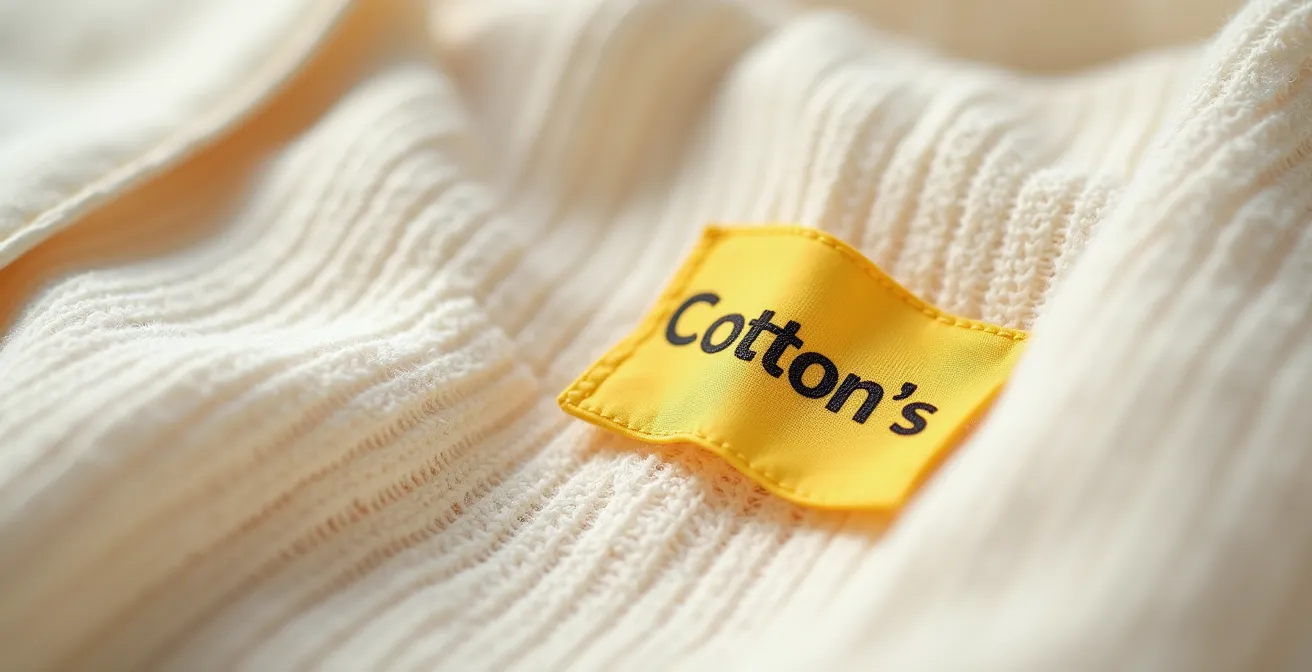
When shopping, look for a specific yellow tag that explicitly states the garment is not flame-resistant and should be worn snug-fitting. This is a clear indicator that it has not been chemically treated. Avoid pajamas made from polyester, even if they are snug-fitting. Polyester is inherently more flame-resistant than cotton but is a petroleum-based plastic fiber that can contain its own set of chemicals, and it is not a breathable material for healthy sleep.
The following table breaks down your options, making it clear which choices protect your child from both fire risk and unnecessary chemical exposure. The best and safest choice is consistently snug-fitting pajamas made from untreated, natural fibers.
| Type | Safety Requirements | Chemical Treatment | Best For |
|---|---|---|---|
| Snug-fitting cotton | Must meet specific fit dimensions | No flame retardants needed | All ages |
| Infant garments (under 9 months) | Exempt from flame requirements | None required | Newborns to 9 months |
| Inherently flame-resistant polyester | Passes flame test naturally | Chemical built into fiber | Not recommended |
| Treated cotton | Meets flame standards | Contains flame retardants | Avoid |
By prioritizing snug-fitting organic cotton, you align with the safest interpretation of the law, ensuring your child’s sleep is both fire-safe and free from disruptive chemicals.
Bamboo vs. Cotton: Which Process Uses Less Harsh Chemicals?
In the search for soft, “natural” fabrics, many parents turn to bamboo, envisioning a purely plant-based and eco-friendly option. The reality, however, is far more complex and depends entirely on the hidden world of chemical processing. The term “bamboo fabric” almost always refers to bamboo viscose (or rayon), a material that starts as bamboo pulp but undergoes an intensive chemical transformation to become a fiber.
The most common method for making bamboo rayon involves a toxic chemical cocktail. The process dissolves the bamboo pulp using harsh solvents like carbon disulfide, a known neurotoxin linked to reproductive harm. As a report from Little Venture Co. explains, if this process is not managed in a “closed-loop” system—where 100% of the chemicals are captured and reused—these toxic substances are often discharged into the air and water, endangering factory workers and polluting surrounding ecosystems. This is why a fabric can be derived from a natural source but be far from non-toxic in its final form.
However, not all bamboo-derived fabrics are created equal. A much safer, though less common, alternative is bamboo lyocell. Like viscose, lyocell starts with wood pulp, but it uses a non-toxic solvent in a closed-loop system that recycles over 99% of the water and chemicals used. This method is dramatically cleaner and safer for both people and the planet. As the Textile Exchange notes, “Bamboo lyocell consistently outperforms cotton on energy and water intensity, but bamboo viscose underperforms due to chemical waste.”
When compared to GOTS-certified organic cotton, the choice becomes clearer. Organic cotton is grown without synthetic pesticides or fertilizers and is processed without the harsh chemicals used in conventional cotton or bamboo viscose production. While bamboo lyocell is a strong environmental contender, GOTS-certified organic cotton remains the most reliable and widely available choice for ensuring a fabric is truly free from harmful chemical inputs from farm to finished product.
Ultimately, the source plant matters less than the journey it takes to become a textile. For parents prioritizing a toxin-free environment, the transparency and rigorous standards of certified organic cotton often provide the greatest peace of mind.
The “Natural” Mistake: Why Plant-Based Doesn’t Mean Spray-Free?
One of the most pervasive myths in the world of “green” consumer goods is that “natural” or “plant-based” automatically means safe and chemical-free. This marketing tactic is especially misleading when it comes to textiles. As we’ve seen with bamboo, the journey from plant to fabric is often laden with chemicals that are anything but natural. The U.S. Federal Trade Commission (FTC) has been so concerned about this greenwashing that it has issued specific guidance to consumers.
The core of the issue is the distinction between a raw material and a finished product. A company can truthfully say a shirt is “made from bamboo,” but this obscures the intensive manufacturing process that stripped the plant of its natural properties and reconstituted it as a synthetic fiber. The FTC puts it bluntly, as highlighted by resources like Q for Quinn which references their guidance:
The soft textiles you see labeled ‘bamboo’ don’t contain any part of the bamboo plant. They are made from bamboo that has been processed into rayon using toxic chemicals.
– Federal Trade Commission, Green Guides
This “natural mistake” extends beyond bamboo. Conventional cotton, though a plant, is one of the most pesticide-heavy crops in the world. These pesticides can remain in the fibers, and the fabric is then often finished with more chemicals. Therefore, relying on vague marketing terms like “plant-derived,” “eco-friendly,” or “natural” is an unreliable strategy for avoiding toxins. True safety lies in third-party verification. Certifications are not just marketing fluff; they are your only guarantee that a product has been independently audited against strict standards. The two most important to know are GOTS (Global Organic Textile Standard) and OEKO-TEX Standard 100. GOTS is the gold standard, as it certifies the entire supply chain from the organic farm to the final product, prohibiting a vast list of harmful chemicals. OEKO-TEX, while also valuable, tests the final product for a list of harmful substances, but it doesn’t audit the farming or manufacturing processes themselves.
Your Checklist for Verifying Truly Non-Toxic Fabrics
- Prioritize GOTS Certification: This is the most comprehensive seal, ensuring the entire supply chain is audited, from farm to finished fabric.
- Look for OEKO-TEX Standard 100: This certification tests the final product for a list of over 100 harmful substances, making it a good secondary check.
- Verify Raw Material Seals: For cotton products, a USDA Organic seal on the raw material is a good sign, though GOTS is more thorough for the final textile.
- Be Wary of Vague Terms: Ignore claims like ‘plant-based,’ ‘all-natural,’ or ‘eco-friendly’ if they are not backed by a specific, verifiable certification.
- Request Proof from Brands: A reputable company should be able to provide its certification numbers upon request. You can then verify these on the certification body’s website.
By shifting your focus from marketing claims to trusted certifications, you can confidently choose fabrics that are genuinely safe for your baby’s delicate system.
What to Replace First: Prioritizing Sheets and Underwear Over Outerwear
Creating a non-toxic nursery can feel like an overwhelming and expensive task. The good news is that you don’t have to replace everything at once. By applying a strategic “contact hierarchy,” you can focus your budget and efforts on the items that will have the biggest positive impact on your baby’s health. This principle is based on two simple factors: the duration of contact and the presence of moisture.
Items that are in direct contact with your baby’s skin for many hours a day, especially in warm and moist conditions (from sweat, drool, or diapers), pose the highest risk for chemical absorption. Chemicals can leach from fabrics more readily in the presence of moisture. This is why a baby’s pajamas or crib sheet is a much higher priority than a jacket they might only wear for an hour outdoors. The crib mattress is the single most important item, as your baby spends 10-12 hours or more in direct contact with it every single day.
This priority matrix helps visualize where to start. Items with the highest scores, based on contact hours and moisture exposure, should be the first things you swap for certified non-toxic alternatives. Investing in a GOTS-certified organic crib mattress and a set of organic cotton sheets can eliminate a huge portion of your baby’s daily chemical exposure in one step.
| Item | Daily Contact Hours | Moisture Exposure | Priority Score | Replacement Order |
|---|---|---|---|---|
| Crib Mattress | 10-12 | High (drool, sweat) | 120 | 1st |
| Sheets/Swaddles | 10-12 | High | 110 | 2nd |
| Pajamas | 8-10 | Medium | 80 | 3rd |
| Play Mat | 2-4 | High (mouthing) | 60 | 4th |
| Outerwear | 1-2 | Low | 10 | Last |
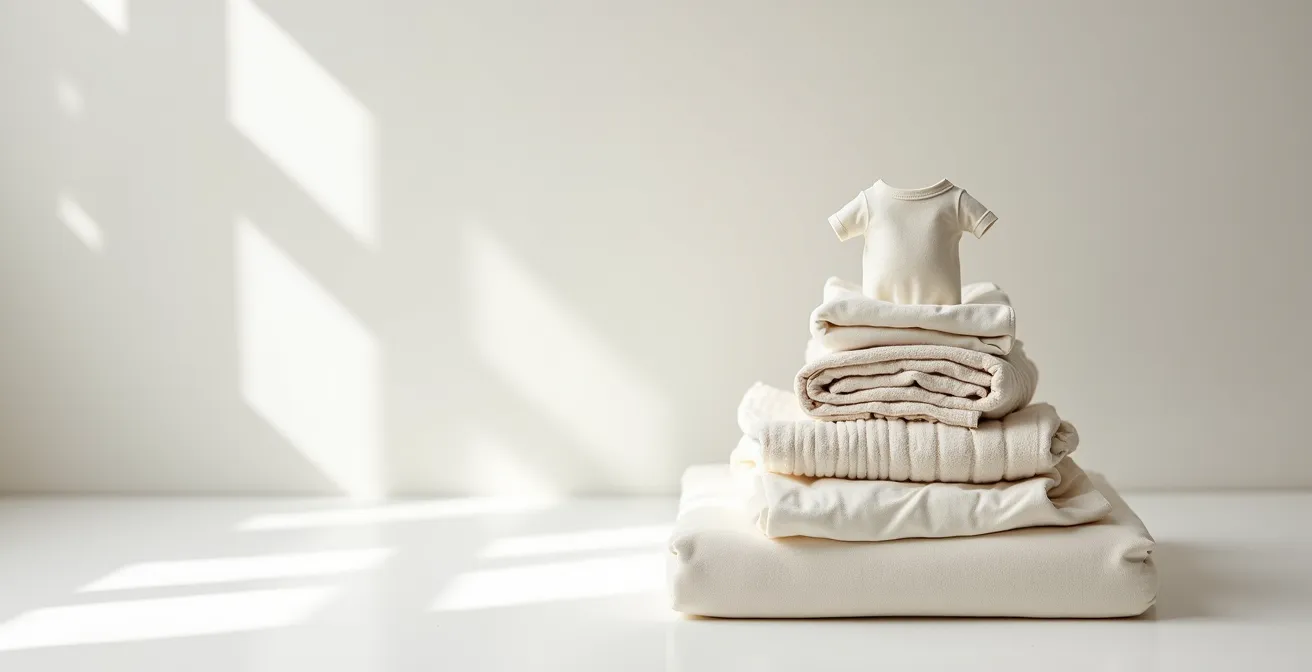
This layered approach is not only more effective but also more manageable. Start with the base of the pyramid—sleep surfaces—and work your way up. Pajamas, onesies, and swaddles form the next critical layer. Play mats where babies spend time on their tummies and may mouth the surface are next. Decorative items like curtains and outerwear like jackets are the lowest priority and can be replaced over time or bought secondhand, as they have minimal direct skin contact and have likely been washed many times, reducing their chemical load.
By focusing on the highest-contact items first, you can create a significantly safer environment for your baby, even on a limited budget.
Why Formaldehyde in Clothing Finishes Causes Itching?
If you’ve ever noticed your baby has irritated, itchy skin after wearing a new, unwashed outfit, you may be witnessing a reaction to chemical finishes. One of the most common culprits is formaldehyde, a chemical used in the textile industry to make fabrics wrinkle-resistant and to help dyes adhere better. While effective for cosmetic purposes, it’s a known skin irritant and carcinogen that off-gasses from fabric, especially when new.
Formaldehyde and other volatile organic compounds (VOCs) are released from the fabric into the air and can be directly absorbed by the skin. When these chemicals make contact with the skin’s moisture, they can trigger an immune response, leading to contact dermatitis—an itchy, red rash. Because a baby’s skin barrier is so much thinner and more sensitive, they are far more susceptible to this type of irritation than adults. Incredibly, studies have found formaldehyde in mainstream baby clothing at concentrations up to 18,000 ppm (parts per million), levels far exceeding what is considered safe for skin contact.
This is why one of the simplest and most effective protective measures you can take is to always wash new clothing before it touches your baby’s skin. Washing (and double-rinsing) new garments in a gentle, fragrance-free detergent can significantly reduce the concentration of residual finishing chemicals like formaldehyde. While it won’t remove chemicals that are structurally part of the fiber (like those in some synthetic fabrics), it is highly effective at washing away surface treatments. It’s a non-negotiable step in reducing your baby’s exposure to these irritating substances.
The “new clothes smell” is often the scent of these very VOCs off-gassing. By choosing certified organic fabrics, you are already selecting materials processed without formaldehyde finishes. However, even with organic items, it is a best practice to wash them before first use to remove any potential contaminants from the factory, shipping, or store environment. This simple habit creates an immediate buffer between industrial processing and your baby’s delicate skin.
A pre-wear wash is a small effort that provides a significant layer of protection, ensuring the first thing to touch your baby’s skin is clean and safe, not a cocktail of industrial chemicals.
Where to Place Study Zones to Encourage Both Focus and Relaxation?
While the term “study zones” might seem premature for a nursery, the underlying principle of creating designated areas for specific activities is fundamental to a healthy and organized environment. For a baby, these are not zones for academic focus, but rather “zones for safety and development.” By thoughtfully arranging the nursery’s textiles, you can create distinct areas that support sleep, play, and relaxation, all while minimizing toxic load.
The first and most critical area is the sleep zone. This is the crib. Following the contact hierarchy, this zone must be the most protected. It should be a sanctuary built with the safest possible materials: a GOTS-certified organic mattress, a non-toxic waterproof protector made of organic cotton (avoiding vinyl/PVC), and organic cotton sheets. The goal here is maximum purity and minimum stimulation. Keep this area free of unnecessary pillows, blankets, and stuffed animals, which not only pose a suffocation risk but can also gather dust and harbor chemicals.
The second key area is the play and exploration zone. This is typically a space on the floor. The central textile here is the play mat. Since your baby will spend hours on this surface during tummy time, learning to crawl, and inevitably mouthing it, its material is crucial. Avoid common foam mats made from EVA or PVC, which can off-gas harmful chemicals. Instead, opt for a play mat made from GOTS-certified organic cotton or natural cork. This creates a safe foundation for exploration. Surround this zone with toys made from natural materials like untreated wood and organic cotton.
Finally, create a comfort and relaxation zone, often centered around a rocking chair or glider. The textiles here include the chair’s upholstery and any throw blankets. While these are a lower priority than the crib, choosing a chair with natural upholstery (like cotton or wool) and having a soft, organic cotton blanket on hand can complete the non-toxic ecosystem. By “zoning” the nursery in this way, you apply a strategic, protective mindset to every textile, ensuring that the areas where your baby sleeps, plays, and relaxes are all contributing to a healthy, toxin-free foundation for their growth.
This approach transforms the abstract goal of “going non-toxic” into a concrete, room-by-room plan that promotes both safety and developmental well-being.
Key Takeaways
- Prioritize replacing textiles based on contact duration and moisture—focus on the crib mattress and sheets first for the biggest impact.
- Avoid chemical flame retardants by choosing snug-fitting pajamas made from GOTS-certified organic cotton.
- Look for GOTS certification as the gold standard for non-toxic fabric, as labels like “natural” or “bamboo” can be misleading.
How to Build a Kids’ Capsule Wardrobe That lasts a Full Season?
Applying the principles of a non-toxic nursery to your child’s clothing can be made simple and sustainable through a capsule wardrobe. The concept is to curate a small, versatile collection of high-quality, interchangeable items, rather than having an overflowing drawer of poor-quality clothes. This “less is more” approach not only reduces decision fatigue but also allows you to invest in safer, more durable fabrics like GOTS-certified organic cotton.
The foundation of a non-toxic capsule wardrobe is choosing materials built to last. Organic cotton is widely recognized for its durability. Unlike conventionally grown cotton, which can have its fibers weakened by harsh pesticides and chemical processing, organic cotton fibers remain stronger and more intact. As a result, garments made from high-quality organic cotton are incredibly soft, breathable, and often become even softer with each wash without losing their shape. This inherent durability means you can buy fewer pieces, as they will stand up to the rigors of a full season of play and frequent washing.
Building the capsule is a matter of strategic selection. Start with a base of neutral-colored essentials and add a few complementary accent pieces. This ensures everything matches, making dressing your child quick and easy. A well-planned capsule can get you through an entire season with a surprisingly small number of items, all while ensuring that what touches your child’s skin is safe and comfortable.
- Start with 7 organic cotton bodysuits or t-shirts in neutral colors (white, cream, grey).
- Add 5 pairs of GOTS-certified pants or leggings in solid, complementary colors.
- Include 3 organic cotton sleepers or pajama sets for nighttime.
- Select 2 organic cotton sweaters or cardigans for easy layering.
- Choose 1 high-quality, GOTS-certified outerwear piece appropriate for the season.
Maintaining these quality garments is simple: wash in a gentle, fragrance-free detergent on a cool cycle (30°C) to preserve the fibers and colors. This mindful approach to clothing not only protects your child from harmful chemicals but also promotes sustainability by reducing waste and consumption. It’s a powerful way to extend the philosophy of your non-toxic sanctuary into every aspect of your child’s daily life.
Begin today by evaluating just one high-contact item in your nursery or wardrobe; every small, informed choice contributes to building a healthier sanctuary for your child’s growth and well-being.