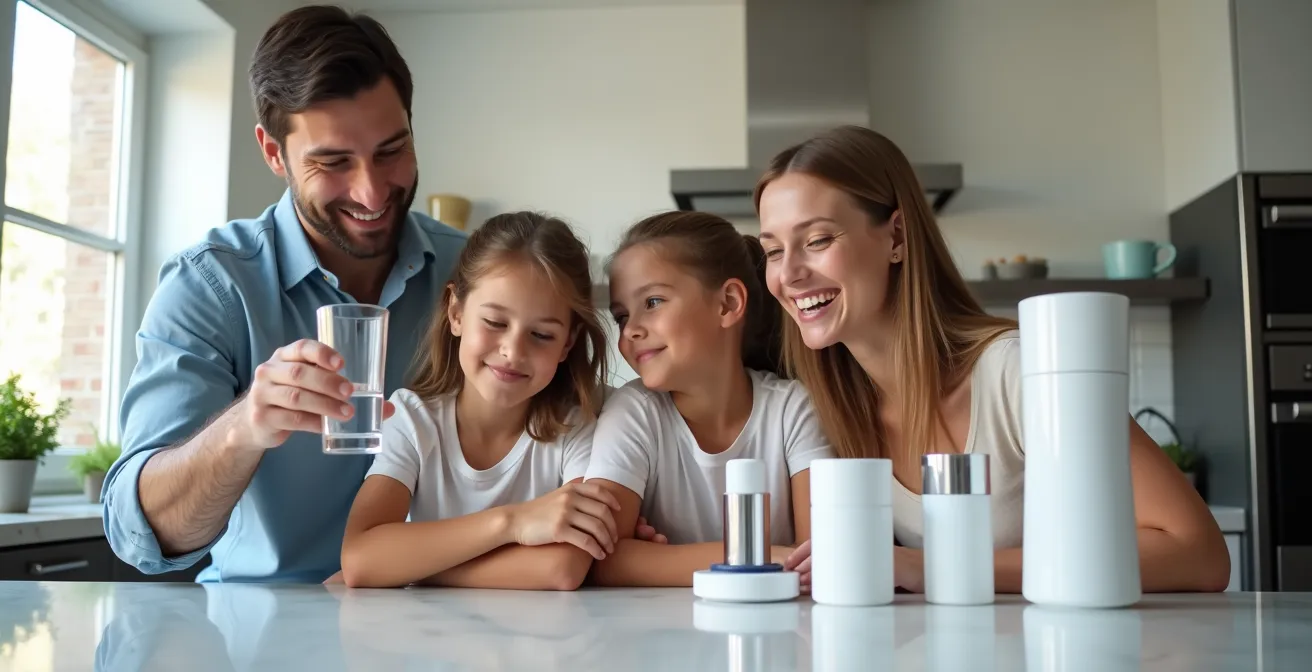
Choosing a water filter isn’t about brand loyalty; it’s a technical risk assessment based on certified performance against specific contaminants.
- The most effective filter (e.g., Reverse Osmosis) isn’t always best, as it may remove beneficial minerals.
- Certifications like NSF/ANSI 53 (for lead) and P473 (for PFAS) are non-negotiable indicators of a filter’s true capabilities.
Recommendation: Identify your local water’s specific contaminants first, then select a filter with a matching, independently-verified certification.
For parents, ensuring a child’s health is a paramount, moment-to-moment responsibility. We scrutinize food labels and research sleep schedules, yet a fundamental component of their well-being often receives less technical attention: the water flowing from the tap. The common advice is to simply buy a pitcher filter or switch to bottled water. However, these surface-level solutions fail to address the complex and often invisible threats lurking in municipal water supplies, from industrial chemicals and agricultural runoff to lead from aging pipes and pervasive microplastics.
The reality is that not all filters are created equal. A standard carbon pitcher may improve taste by reducing chlorine but can be ineffective against heavy metals or emerging contaminants like pharmaceuticals and hormones. From a water quality engineering perspective, selecting a filter is not a consumer preference choice but a precise technical intervention. It requires a shift in mindset—away from marketing claims and toward a clear-eyed assessment of specific risks and certified removal capabilities.
This guide moves beyond generic advice. We will deconstruct the science of hydration for developing bodies, compare filtration technologies based on their mechanical and chemical removal mechanisms, and teach you how to read certification labels like an engineer. The goal is to empower you with the technical knowledge to select a system that provides a true barrier against the specific contaminants that pose the greatest risk to your family, ensuring every glass of water is genuinely safe and supportive of their growth.
Summary: A Technical Guide to Family Water Filtration
- Why Thirst Is a Late Sign of Dehydration in Active Kids?
- How to Infuse Water Naturally so Kids Choose It Over Juice?
- Reverse Osmosis vs. Carbon Pitcher: Which Removes Hormones?
- The Bottled Water Mistake That Exposes Kids to Microplastics
- When to Drink: Why Gulping Water During Meals Dilutes Digestion?
- Organic vs. Conventional: Which Fruits Are Worth the Extra Cost?
- How to Read a GOTS Label vs. Oeko-Tex Standard 100?
- How to Introduce Nutrient-Rich Foods to a Fussy Eater in 7 Days?
Why Thirst Is a Late Sign of Dehydration in Active Kids?
From an engineering standpoint, the human body is a finely tuned hydraulic system, and this is especially true for children. Their bodies are compositionally different from adults, a fact that has critical implications for hydration. According to research, infants and children have between 65% to 80% total body water, significantly higher than the average adult. This higher percentage means they have a faster water turnover rate, making them more susceptible to rapid dehydration, particularly during physical activity. Their thermoregulatory systems are also less developed, leading to greater fluid loss through sweat that they may not be able to adequately communicate.
Consequently, the sensation of thirst in a child is not an early warning; it is a lagging indicator that the body’s water balance is already compromised. By the time an active child says, “I’m thirsty,” they may have already lost a percentage of body weight in fluid, triggering a cascade of physiological responses. These can include decreased cognitive function, irritability, and reduced physical performance. Relying on thirst as a cue is an inherently reactive strategy, whereas maintaining optimal health in a developing body requires a proactive one.
Parents must therefore act as external regulators, monitoring for more subtle, early-stage signals. This includes observing changes in mood, a decrease in focus during play, or fatigue that seems disproportionate to the activity level. Checking urine color is another effective diagnostic tool; pale yellow indicates good hydration, whereas darker shades signal a need for immediate fluid intake. Establishing a routine of regular water breaks, rather than waiting for a request, is the most effective engineering approach to maintaining a child’s delicate hydraulic balance. This proactive stance is the first line of defense in ensuring their physical and cognitive systems operate at peak efficiency.
How to Infuse Water Naturally so Kids Choose It Over Juice?
While ensuring access to clean water is a technical challenge, encouraging children to drink it is a behavioral one. For a child’s palate, conditioned by the hyper-sweetness of juices and sodas, plain water can seem unappealing. The engineering solution is not to compete on sweetness but to innovate on sensory appeal. Natural water infusion is a highly effective method to transform plain water into a visually enticing and flavorful beverage without introducing sugars or artificial additives.
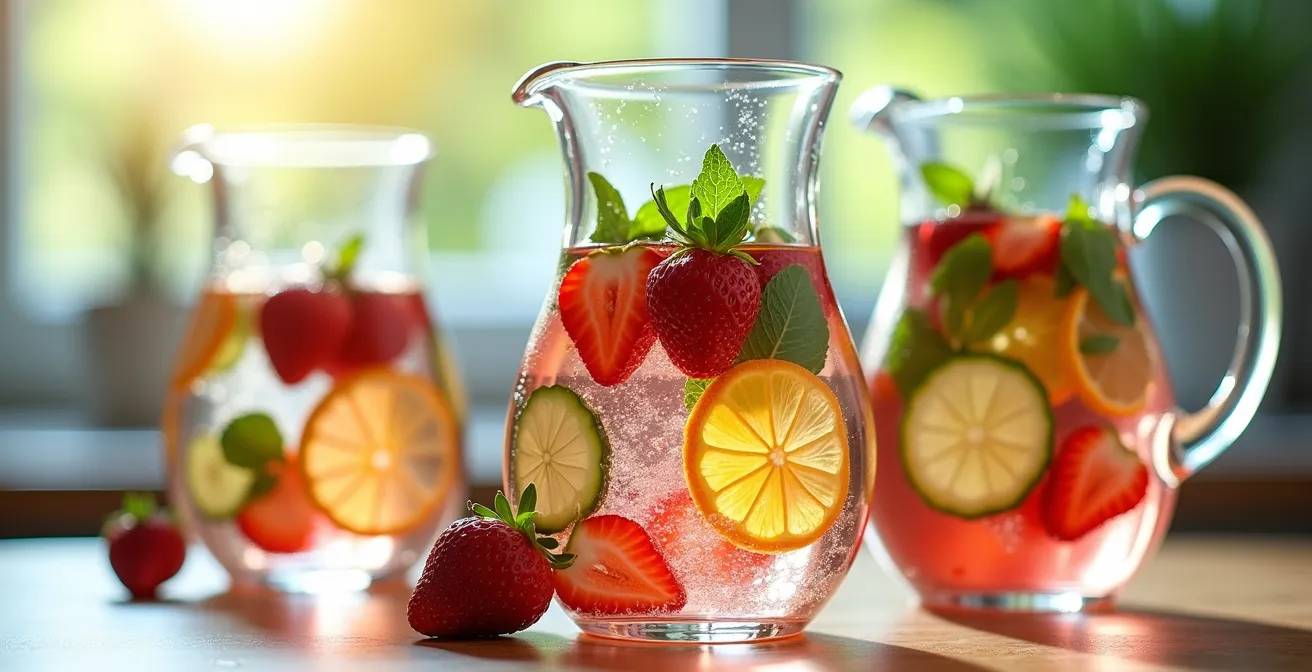
The principle is simple: use the natural compounds found in fruits, vegetables, and herbs to lightly flavor the water. This process enhances the sensory experience through color, aroma, and taste. Combinations like strawberry and mint, cucumber and lime, or orange and blueberry create vibrant, attractive pitchers that can capture a child’s interest in a way a plain glass of water cannot. This approach re-frames water from a “boring” necessity to a “special” and exciting drink. Involving children in the process—letting them choose the ingredients and add them to the pitcher—further increases their buy-in and willingness to drink it.
Furthermore, this strategy can be linked to scientific curiosity. As one educational case study showed, children who participate in hands-on experiments, such as building their own simple water filters, develop a greater appreciation for clean water. This newfound interest makes them more receptive to drinking filtered water. By presenting infused water as a fun “potion” or a science experiment in flavor, parents can leverage a child’s natural curiosity to build healthy, lasting hydration habits. It becomes less about forcing a choice and more about fostering a positive, engaging relationship with water itself.
Reverse Osmosis vs. Carbon Pitcher: Which Removes Hormones?
When moving beyond taste and into the realm of invisible contaminants, the choice of filtration technology becomes critical. A standard carbon pitcher and a reverse osmosis (RO) system operate on fundamentally different principles, leading to vastly different removal capabilities. Carbon filters work primarily through adsorption, where contaminants like chlorine and some volatile organic compounds (VOCs) stick to the carbon’s surface. While excellent for improving taste and odor, their effectiveness against dissolved solids, heavy metals, and emerging contaminants like hormones is limited.
Reverse Osmosis, in contrast, is a pressure-driven process that uses a semipermeable membrane with microscopic pores. Water molecules are forced through, while larger molecules—including salts, heavy metals like lead, and complex organic compounds like hormones and pharmaceuticals—are blocked and flushed away. This mechanical separation is far more effective at removing a broader spectrum of contaminants. The following table, based on data from filtration experts, illustrates the technical differences in performance for contaminants of concern to families. This data can be found in a comprehensive analysis of home filtration systems.
| Feature | Reverse Osmosis | Carbon Pitcher |
|---|---|---|
| Hormone Removal | 99% effective | Limited effectiveness |
| Mineral Retention | Removes beneficial minerals | Preserves minerals |
| PFAS Removal | Up to 99% | 30-70% with certified models |
| Annual Cost | $75-95 filter replacement | $40-200 depending on usage |
| Installation | Professional recommended | No installation needed |
The key trade-off with RO is that it also removes beneficial minerals like calcium and magnesium, resulting in “demineralized” water. Some systems address this with a remineralization stage that adds these minerals back. However, for parents whose primary concern is the removal of lead or endocrine disruptors, the comprehensive purification offered by RO is technically superior. As the Clean Water Store Technical Team notes in their 2026 guide, the certification for this level of protection is crucial:
NSF/ANSI 53 is the one parents usually care about most because it covers lead and harmful microbes.
– Clean Water Store Technical Team, Best Whole-Home Water Filters for Families Guide 2026
The Bottled Water Mistake That Exposes Kids to Microplastics
Many families, concerned about tap water quality, turn to what they perceive as a safer alternative: bottled water. While this choice may circumvent issues like lead or chlorine, it introduces a significant and insidious risk: microplastics. Plastic bottles, particularly single-use PET bottles, are known to shed microscopic plastic particles into the water they contain. This problem is exacerbated by heat and physical stress, meaning a bottle of water left in a hot car or a child’s backpack can have a significantly higher concentration of microplastics.
For developing bodies, the long-term health implications of ingesting these particles are still under investigation but are a source of growing concern among scientists. These particles can carry toxic chemicals and have been shown to accumulate in human organs. Given that children consume more water relative to their body weight, their cumulative exposure over a lifetime is potentially much greater. Relying on bottled water is therefore trading a known set of risks for an unknown, but potentially more pervasive, one. The solution lies in abandoning single-use plastics in favor of inert materials.

Switching to high-quality stainless steel or glass water bottles for daily use eliminates this source of exposure. When coupled with a certified home filtration system, families can produce water that is not only free from tap water contaminants but also free from the plastic particles shed by its container. This two-pronged approach—filtering at the source and using inert containers—represents the most robust engineering solution to ensuring water purity from tap to consumption. The following checklist provides a clear action plan to systematically reduce this risk.
Action Plan: Minimizing Your Family’s Microplastic Exposure
- Identify Contact Points: List all instances where your family uses plastic bottles (school, sports, travel, at home).
- Inventory Existing Bottles: Check the recycling codes on all reusable plastic bottles; immediately discard any that are scratched or are made from plastics #3 (PVC), #6 (PS), or #7 (Other).
- Assess Exposure Conditions: Audit your habits. Do you leave water bottles in hot cars or direct sunlight? This significantly increases plastic leaching.
- Implement the Solution: Systematically replace all plastic drinking bottles with high-quality stainless steel or glass alternatives.
- Eliminate the Source: Install a home water filtration system certified for your specific needs to remove the reliance on bottled water altogether.
When to Drink: Why Gulping Water During Meals Dilutes Digestion?
Beyond the quality of water, the timing of its consumption has a direct impact on a child’s digestive health. A common habit is to encourage children to drink large amounts of water during meals. From a biochemical engineering perspective, this practice can be counterproductive. The stomach relies on a highly acidic environment and a potent concentration of digestive enzymes to break down food effectively. Gulping significant volumes of water, especially cold water, during a meal can temporarily dilute these gastric juices and lower the stomach’s temperature.
This dilution can slow down the action of enzymes like pepsin, which requires a highly acidic environment to function optimally. The result can be less efficient digestion, leading to feelings of bloating, discomfort, or incomplete breakdown of nutrients. For children, whose digestive systems are still maturing, this can manifest as fussiness at meal times or complaints of a “full” stomach after eating very little. As one parent who shifted their family’s habits noted, the results can be quite noticeable.
After implementing the ‘bookend hydration’ approach – water before and after meals rather than during – one parent reported their child’s digestion improved noticeably, with less bloating and better appetite at meal times.
– Parent Experience, noted by the EPA on Children’s Environmental Health
A more effective strategy is to “bookend” meals with hydration. Encourage children to drink a glass of water 20-30 minutes before eating to ensure they are well-hydrated and to prime the digestive system. During the meal, small sips are perfectly fine to aid swallowing, but large gulps should be avoided. Hydration can then resume about an hour after the meal is finished, once the primary phase of digestion is complete. This timed approach respects the body’s natural biochemical processes, allowing for optimal nutrient absorption and greater comfort.
Organic vs. Conventional: Which Fruits Are Worth the Extra Cost?
The decision between organic and conventional produce is often framed as a choice about pesticide residue on the food itself. However, from a water quality perspective, the implications are much broader. The widespread use of agricultural pesticides and herbicides, such as atrazine, directly impacts the safety of our drinking water sources. These chemicals seep into the soil and run off into groundwater, streams, and rivers that feed municipal water supplies. Choosing organic is not just about the apple your child eats; it’s a vote to reduce the contaminant load in the water they drink.
Atrazine is a potent endocrine disruptor that is commonly detected in tap water across the country. Even at levels below the federal legal limit, it has been linked to significant health problems. For instance, in areas with detectable levels of the herbicide, health officials have raised alarms. In fact, some recommendations are extremely stringent; a report on drinking water safety highlights that California health officials recommend filtering water if atrazine exceeds 0.15 ppb—a fraction of the legal federal limit.
The connection between this contaminant and child health is not theoretical. It has been demonstrated in scientific research that highlights the vulnerability of developing bodies to even low-level exposure.
Case Study: The Atrazine-Preterm Birth Link
Researchers at the University of Illinois established a direct, statistically significant link between exposure to atrazine in drinking water and an increased risk of preterm births. This effect was observed even when atrazine concentrations were only one-seventh of the federally mandated legal limit. The study also found that the adverse effects were potentially magnified when nitrates, another common agricultural contaminant, were also present in the water supply. This demonstrates the synergistic and dangerous effects of chemical cocktails in drinking water.
Therefore, when considering the cost of organic fruit, the calculation must include the “cost” of removing these agricultural chemicals from your family’s water. By choosing organic, you contribute to reducing the overall chemical burden on the water system. For a household, this means that if you live in an agricultural area, a high-quality filter certified for pesticide removal (like an RO system or a specialized carbon filter) is not a luxury, but a necessity for protecting your family’s health.
How to Read a GOTS Label vs. Oeko-Tex Standard 100?
Just as a discerning parent learns to read a GOTS (Global Organic Textile Standard) label to verify the organic integrity of clothing, a technically-minded parent must learn to decode water filter certifications. These labels are not marketing stickers; they are legally defined standards that certify a filter’s performance against specific contaminants. Relying on a manufacturer’s vague claims like “removes 99% of contaminants” is meaningless without knowing *which* contaminants and under what testing standard.
The most respected independent testing body in North America is the NSF (National Sanitation Foundation), which co-publishes standards with ANSI (American National Standards Institute). Understanding these numbers is the key to making an informed choice. Each standard tests for a different class of contaminants:
- NSF/ANSI 42: Aesthetic Effects. This is the most basic certification. It confirms the filter reduces aesthetic impurities like chlorine, which affects taste and odor. A filter with only this certification does little to protect against health-related contaminants.
- NSF/ANSI 53: Health Effects. This is a critical certification for families. It verifies the filter’s ability to reduce contaminants with known health effects, such as lead, mercury, asbestos, and certain cysts like Giardia. A filter must be explicitly certified for *each* contaminant it claims to remove under this standard.
- NSF/ANSI 401: Emerging Contaminants. This standard addresses incidental contaminants like prescription drugs, over-the-counter medications, herbicides, pesticides, and chemical compounds like BPA.
- NSF P473: PFOA/PFAS Removal. This certification specifically targets “forever chemicals” like PFOA and PFAS, which are persistent in the environment and linked to serious health issues.
When you are comparing filters, you must look for these specific numbers. A filter might be certified under NSF/ANSI 42 and 53, but only for chlorine and lead, not for emerging contaminants. It is your job as the “quality control engineer” for your family to check the fine print on the filter’s performance data sheet to confirm it is certified to remove the specific contaminants present in your local water supply.
Key Takeaways
- Children’s unique physiology makes them more vulnerable to dehydration and contaminants, requiring proactive water safety measures.
- Filtration technology matters: Reverse Osmosis is superior for removing hormones and heavy metals, while carbon is primarily for taste.
- Independent certifications (NSF/ANSI 53, 401, P473) are the only reliable way to verify a filter’s claims against specific health-related contaminants like lead and PFAS.
How to Introduce Nutrient-Rich Foods to a Fussy Eater in 7 Days?
Before embarking on a complex 7-day plan to tempt a “fussy eater” with new foods, a fundamental variable must be controlled: the quality of the water. A child’s rejection of certain foods, especially lightly flavored vegetables or grains, may not be about the food itself. It could be a reaction to the unpalatable taste of chlorine or other chemicals present in the water used for drinking and cooking. The WHO estimates that improving water safety could prevent a staggering number of health issues, and while their focus is on disease, the principle extends to general well-being. Indeed, access to safe water could prevent the deaths of 395,000 children under 5 annually.
Chlorine, used as a disinfectant in most municipal water supplies, creates a distinct chemical taste and odor that can be easily absorbed by foods like pasta, rice, and steamed vegetables. A child’s palate, often more sensitive than an adult’s, may detect this off-taste and associate it with the food, leading to rejection. If the water your child drinks alongside their meal tastes unpleasant, it can further create a negative association with mealtime altogether. Therefore, the first step in addressing fussy eating should be to install a filter certified under NSF/ANSI 42 to remove aesthetic impurities like chlorine.
By providing a clean, neutral-tasting baseline for both drinking and cooking, you eliminate a major confounding variable. You create a “clean slate” where the true flavor of the food can shine through. Often, parents are surprised to find that once the chemical taste is gone, their child’s willingness to try new foods increases dramatically. Only after ensuring the water is pure should one begin introducing new foods, textures, and flavors. This engineering-first approach isolates the problem and often reveals that the issue wasn’t the child’s palate, but the water it was being exposed to.
Your next step is to identify the specific contaminants in your local water supply by checking your municipality’s water quality report. With that data in hand, you can select a filtration system with the correct, independently-verified certifications to provide a genuine barrier of protection for your family.
Frequently Asked Questions on Water and Family Health
Does room temperature water affect digestion differently than cold water?
Yes, room temperature water is gentler on the digestive system. It does not require the body to expend energy to warm it up and does not slow down enzymatic activity in the same way that ice-cold water can, making it a better choice during meals.
How much water should children drink daily?
While individual needs vary with activity level, climate, and age, data from the U.S. shows that children aged 4-13 drink an average of 23 ounces (about 3 cups) of plain water daily. This should be seen as a baseline, with active children requiring significantly more.
When is the best time for children to hydrate around meals?
The optimal strategy is to encourage drinking water 20-30 minutes before meals to aid digestion and ensure hydration. During the meal, only small sips should be taken. Full hydration can resume about an hour after eating, once the main digestive processes are underway.