
True, lasting immunity isn’t a switch you flip before flu season; it’s a resilient internal ecosystem you cultivate year-round.
- The gut is your child’s immune command center, housing over 70% of their defensive cells.
- Whole foods provide nutrients in a complex “food matrix” that the body absorbs far more effectively than isolated, synthetic vitamins.
- Deep sleep and even playing in the dirt aren’t just childhood activities; they are powerful, non-negotiable immune-training tools.
Recommendation: Shift your focus from fighting every germ to strategically building a robust internal foundation that can handle life’s inevitable exposures.
As a parent, the cycle can feel relentless: the sniffles that arrive home from nursery, the cough that lingers for weeks, and the constant worry as flu season approaches. It’s a frustrating loop that often leads us to reach for the nearest bottle of sanitiser or a brightly-coloured multivitamin, hoping for a quick fix. We’re told to ensure they “eat their veggies” and “get enough sleep,” but these well-meaning platitudes often miss the deeper, more powerful truth about a child’s health. The first signs of a weak immune system—frequent colds, slow recovery, and persistent fatigue—aren’t just bad luck; they’re signals from a system that needs foundational support, not just a temporary shield.
But what if the key wasn’t simply to “boost” immunity with isolated quick fixes, but to build a truly resilient immune ecosystem from the inside out? The secret to fewer sick days and a healthier, happier child lies not in a magic pill, but in understanding and nurturing the core pillars of their body’s natural defenses. This approach moves beyond simply protecting your child from germs and instead focuses on training their immune system to be intelligent, balanced, and strong. It’s about seeing the body as an interconnected garden, where the gut is the soil, the food is the nutrient-rich compost, and sleep is the restorative rain.
This guide will walk you through this holistic, naturopathic approach. We’ll explore why the gut is the absolute foundation of health, how to choose the most bioavailable nutrients, the critical role of sleep cycles, and even why a little bit of dirt can be one of the best things for your child. By the end, you will have a clear, actionable framework for cultivating a deep, lasting state of health that prepares your child not just for flu season, but for a lifetime of vitality.
To help you navigate these core principles, this article is structured to build your understanding step-by-step. The following summary outlines the key areas we will explore to create a comprehensive plan for your child’s immune resilience.
Summary: A Holistic Framework for Child Immunity
- Why 70% of Your Child’s Immune System Lives in Their Gut?
- How to Get Enough Vitamin D When the Sun Sets at 4 PM?
- Multivitamins vs. Smoothies: Which Absorption Rate Is Superior?
- The Sanitizer Mistake That Weakens Natural Bacterial Defenses
- When Immunity Is Built: The Critical Role of Deep Sleep Cycles
- Why Playing in the Mud Is Actually Good for Your Child’s Immune System?
- Why Your Child’s Brain Needs Fat to Process Information Efficiently?
- How to Sneak 25g of Fiber Into a Kid’s Diet Without Them Noticing?
Why 70% of Your Child’s Immune System Lives in Their Gut?
Before we discuss any vitamin or supplement, we must start at the command center: the gut. It’s a staggering fact that approximately 70% of the immune system resides in the gut, making gut health the single most important factor in your child’s overall resilience. Think of the gut lining as a tightly woven cheesecloth that allows nutrients to pass into the bloodstream while keeping out toxins, undigested food particles, and harmful bacteria. The strength of this barrier, and the health of the friendly bacteria living within it, dictates the intelligence and reactivity of your child’s immune response.
When the gut microbiome is rich in diverse, beneficial bacteria, it forms a living shield. These microbes help digest food, produce vitamins, and, most importantly, “train” immune cells to distinguish between friend and foe. Studies on the impact of fermented foods show that children who regularly consume probiotic-rich options like yogurt or kefir have greater gut flora diversity. This strengthens the intestinal tract, leading to fewer infections and a more balanced immune response. A healthy gut means a calm, effective immune system. An imbalanced gut, on the other hand, can lead to chronic inflammation and an over-reactive immune system, which is often the root cause of allergies, eczema, and frequent illness.
Building this internal ecosystem isn’t a quick fix that happens in a week; it’s a long-term project of conscious nourishment. The goal is to feed the beneficial microbes with a wide variety of plant-based foods. Aiming for 30 different plant foods per week—including fruits, vegetables, nuts, seeds, legumes, herbs, and spices—is a powerful way to enhance microbial diversity. Each plant type feeds a different family of good bacteria, creating a more robust and resilient internal army ready to defend against invaders. This foundational work on the gut is what creates lasting health, far beyond the temporary effects of any single supplement.
How to Get Enough Vitamin D When the Sun Sets at 4 PM?
As the days grow shorter and outdoor playtime dwindles, levels of the “sunshine vitamin,” Vitamin D, begin to plummet. This is more than a minor concern; Vitamin D acts less like a vitamin and more like a hormone, playing a crucial role in modulating the immune system. It’s essential for activating our T-cells, the “killer cells” that identify and destroy invading pathogens. Without sufficient Vitamin D, our immune system’s frontline soldiers are effectively unarmed. For children, especially during the darker months, maintaining adequate levels is a non-negotiable part of flu season preparedness.
While sunlight is the most potent source, it’s simply not a reliable option for many during winter. Food sources can help but often fall short of the required amounts. This is one of the few instances where, as a naturopath, I see a clear case for targeted supplementation. In fact, clinical research demonstrates that vitamin D supplementation during cold and flu season can significantly decrease a child’s risk of contracting the flu. The key is ensuring the supplement is high quality and dosed appropriately for your child’s age and needs, a conversation best had with your healthcare provider.
Understanding the different sources and their potency is key for parents. The following table breaks down how food, sunlight, and supplements compare.
| Source | Amount of Vitamin D | Bioavailability | Best For |
|---|---|---|---|
| UV-exposed mushrooms | 400 IU per serving | High with fats | Plant-based diets |
| Fatty fish (salmon) | 450 IU per 3oz | Excellent | Overall nutrition |
| Fortified milk | 100 IU per cup | Good with meals | Daily intake |
| 15 min sunlight | 1000-4000 IU | Optimal | Summer months |
| Supplements | 400-1000 IU | Variable | Winter/deficiency |
As this comparison of Vitamin D sources illustrates, a strategic combination is often the most effective approach. Relying on sunlight in the summer, incorporating fatty fish and fortified foods year-round, and considering a supplement during the winter creates a comprehensive strategy to keep your child’s immune system activated and ready.
Multivitamins vs. Smoothies: Which Absorption Rate Is Superior?
In the quest for a healthy child, the brightly coloured, chewable multivitamin is a common sight in many family medicine cabinets. The logic seems sound: cover all the nutritional bases with one simple pill. However, the question isn’t just about what’s in the vitamin, but how much of it the body can actually use. The concept of bioavailability—the proportion of a nutrient that enters circulation and has an active effect—is where whole foods, like those in a smoothie, dramatically outperform their synthetic counterparts.
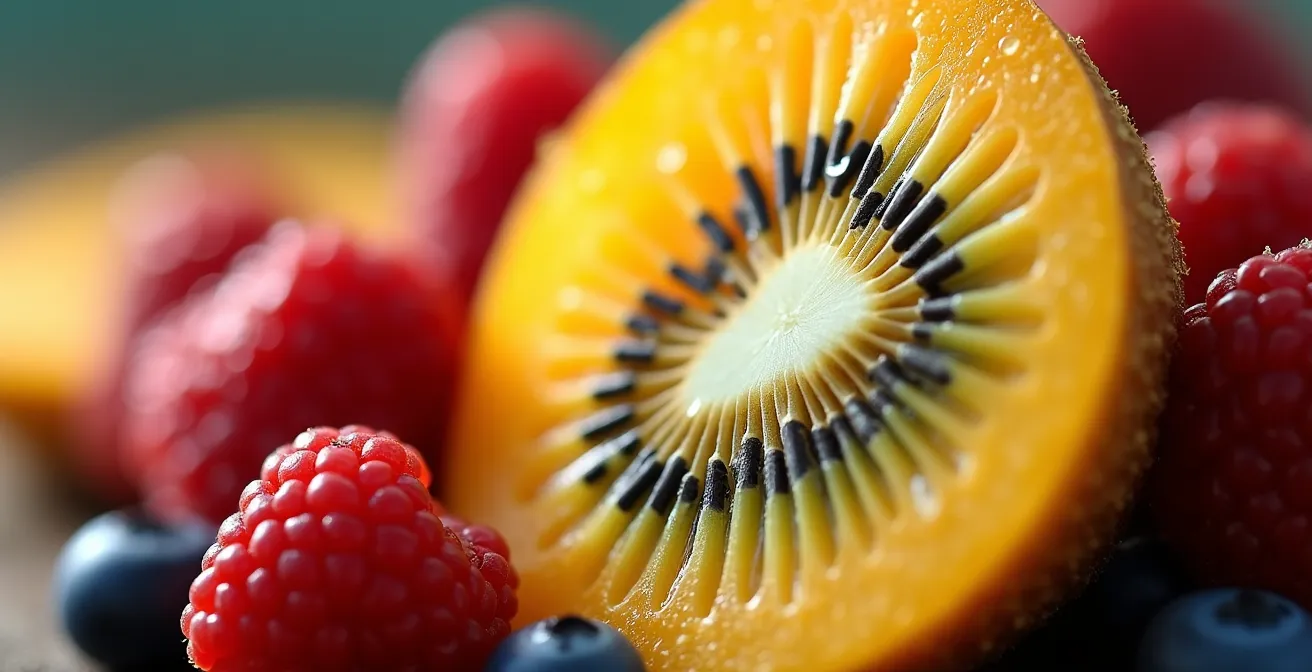
Nutrients in nature don’t exist in isolation. They are beautifully packaged within a complex food matrix of fibres, enzymes, antioxidants, and other phytonutrients that work synergistically to enhance absorption and utilisation. An orange, for example, provides Vitamin C alongside bioflavonoids that help the body use it more effectively. A synthetic Vitamin C tablet lacks this natural architecture. This is why a smoothie, packed with whole fruits, vegetables, seeds, and healthy fats, offers a far superior rate of absorption. The body recognises and knows exactly what to do with nutrients presented in their natural state.
This difference is particularly critical for some children. Emerging research shows that genetic variations, such as the MTHFR mutation, can make it difficult for a child’s body to process synthetic forms of certain B-vitamins, like folic acid, commonly found in multivitamins. These children derive far greater benefit from natural folate found in leafy greens, lentils, and avocados. For them, a green smoothie isn’t just a healthier choice; it’s a more biologically compatible one. While a targeted, high-quality supplement has its place for specific deficiencies (like Vitamin D in winter), a “shotgun” approach with a generic multivitamin is often an inefficient, and sometimes counterproductive, strategy.
The Sanitizer Mistake That Weakens Natural Bacterial Defenses
Handwashing is, without a doubt, a cornerstone of hygiene. We know that up to 80% of infections are spread by touch, and proper washing can drastically reduce the transmission of germs. However, in our well-intentioned effort to keep our children safe, we’ve veered into an era of over-sanitisation. The constant use of alcohol-based hand sanitisers and harsh antibacterial soaps can be a significant mistake, as it indiscriminately wipes out both harmful and beneficial bacteria on the skin’s surface, disrupting the body’s first line of microbial defence.
This approach also robs the immune system of crucial learning opportunities. A child’s immune system is not born fully formed; it needs to be educated. Exposure to a variety of everyday microbes is like sending the immune system to school. It learns to identify real threats, build a memory bank of pathogens, and, importantly, learn what *not* to attack. When we create a sterile environment, we’re essentially keeping the immune system in a bubble, leaving it naive and unprepared for genuine threats. This is a key part of the hygiene hypothesis, which suggests that a lack of early childhood exposure to microbes increases the risk of allergic and autoimmune diseases.
The solution isn’t to abandon hygiene but to practice it intelligently. The goal is to reduce the load of harmful pathogens without declaring war on the entire microbial world. This means prioritising plain soap and water for most situations and reserving hand sanitiser for specific, high-risk moments when a sink isn’t available. It’s about finding a healthy balance between cleanliness and allowing for the beneficial “immune training” that comes from interacting with the natural world.
Your Rulebook for Clean Hands Without Over-Sanitizing
- Prioritize Soap and Water: Aim for soap and water for 90% of hand cleaning. Teach your child to wash for 20 seconds using fun songs to time it.
- Reserve Sanitizer Strategically: Use alcohol-based sanitizers only when necessary, such as after using public transport or before a snack outdoors with no sink access.
- Embrace Beneficial Dirt: After playing in a garden or forest, wash hands thoroughly with regular soap and water, but don’t feel the need to immediately sanitize the experience away.
- Avoid Antibacterial Soaps: Steer clear of soaps containing triclosan. Regular soap is just as effective at removing germs without disrupting the skin’s microbiome.
- Establish “Wash Zones”: Create consistent habits by designating key times for handwashing: always after using the bathroom, before every meal, and after sneezing or blowing their nose.
When Immunity Is Built: The Critical Role of Deep Sleep Cycles
In our busy lives, we often view sleep as a passive state of rest. For a child’s immune system, however, it is the most active and crucial period of work. During deep, restorative sleep, the body isn’t just recharging; it’s manufacturing and deploying its most important immune cells. This is when the production of cytokines, proteins that target infection and inflammation, ramps up. It’s also when T-cells are reinforced and the body solidifies its “immune memory” from the day’s exposures.
Skimping on sleep, even by a small amount, can have a direct and immediate impact. In fact, compelling scientific evidence demonstrates that insufficient sleep can make vaccines less effective, as the body is unable to mount a strong antibody response. A tired body is a stressed body, and the stress hormone cortisol, which rises with sleep deprivation, actively suppresses immune function. This is why a child who is run-down is far more likely to catch whatever is going around the classroom.

More important than just the total hours slept is the consistency of the sleep schedule. Research from the Sleep Foundation highlights that maintaining a consistent bedtime and wake time—even on weekends—does more for immune function than getting more sleep on an irregular schedule. This circadian alignment helps regulate the body’s natural rhythms, including the release of immune-modulating hormones. For optimal immune building, toddlers (ages 1-2) need 11-14 hours of sleep, including naps, while preschoolers (ages 3-5) require 10-13 hours. Creating a calming, screen-free bedtime routine and a dark, cool, quiet sleep environment are not just nice-to-haves; they are foundational pillars of a strong immune system.
Why Playing in the Mud Is Actually Good for Your Child’s Immune System?
The modern instinct is to shield our children from dirt, but this impulse, born from a desire to protect, may be doing more harm than good. The “hygiene hypothesis” posits that our increasingly sterile environments are contributing to a rise in allergies and autoimmune conditions. The immune system needs a diverse range of inputs from the natural world to learn and calibrate itself. Playing in the mud, digging in a garden, and spending time in nature provides a rich source of these inputs in the form of soil-based organisms and other environmental microbes.
This isn’t just a theory; it’s backed by observation. Studies consistently show that children who grow up on farms and spend ample time outdoors tend to have stronger immune systems, with significantly lower rates of allergies and asthma. This “farm effect” is largely attributed to their early and regular exposure to a wide array of microorganisms from soil and animals. This exposure acts as a form of immune training, teaching the system to remain calm in the face of harmless substances like pollen or dust, thereby preventing the overreactions that lead to allergies.
Of course, this doesn’t mean ignoring basic safety and hygiene. The key is “safe dirt exposure.” This involves seeking out natural, chemical-free environments and practicing common-sense cleanliness, like washing hands before eating. For families in urban environments, this can take a little more creativity, but it’s entirely achievable. Simple strategies can help reintroduce this vital connection to the earth:
- Visit local farms or petting zoos for exposure to different animal and soil microbes.
- Start a container garden on a balcony or windowsill, and let your kids get their hands dirty with organic soil.
- Schedule regular nature hikes in parks or forests where contact with natural soil is encouraged.
- Create a “digging box” with organic soil or sand for regular, messy play.
By reframing “dirt” from a threat to a teacher, we can provide our children’s immune systems with the education they desperately need to become balanced and resilient.
Why Your Child’s Brain Needs Fat to Process Information Efficiently?
While the title focuses on the brain, the truth is that the right kinds of fats are fundamental building blocks for both cognitive function and a balanced immune system. Our bodies, and especially a growing child’s brain, are made of fat. But not all fats are created equal. The modern diet is often overloaded with inflammatory Omega-6 fatty acids (found in vegetable oils, processed snacks) and deficient in anti-inflammatory Omega-3 fatty acids (found in fatty fish, walnuts, and flaxseeds). This imbalance can fuel chronic, low-grade inflammation, a state that keeps the immune system on high alert and depletes its resources.
Chronic inflammation is like an engine that’s always running hot—it’s inefficient and prone to breaking down. It distracts the immune system, making it less effective at fighting off real threats like viruses and bacteria. Omega-3s, particularly DHA and EPA, are powerful tools for cooling this inflammation. They are converted into molecules called resolvins, which, as their name suggests, help to *resolve* the inflammatory process and tell the immune system to stand down. This not only frees up the immune system to do its job properly but also provides the essential fats needed for healthy brain development, focus, and mood regulation.
As Dr. Elizabeth Lippner, MD, of Lurie Children’s Hospital, points out, the system is interconnected:
Physical activity helps regulate fatty acids in hormones, which play a role in the immune system. Exercise also helps blood circulate, which keeps the immune system’s highways clear and makes sure needed oxygen gets to your tissues.
– Dr. Elizabeth Lippner, MD, Lurie Children’s Hospital
Making simple, strategic swaps in your child’s diet can have a profound impact on their inflammatory balance. The goal isn’t to eliminate Omega-6s entirely, but to bring the ratio back into a healthier equilibrium.
| Instead of (High Omega-6) | Choose (High Omega-3) | Inflammation Impact |
|---|---|---|
| Potato chips | Walnuts | Reduces inflammation |
| Vegetable oil | Avocado oil | Supports anti-inflammatory pathways |
| Processed snacks | Salmon bites | Provides DHA/EPA for resolvins |
| Ranch dressing | Olive oil based dressing | Decreases inflammatory markers |
| Corn oil | Flaxseed oil | Balances fatty acid ratios |
This approach to managing fatty acids is a cornerstone of reducing the body’s inflammatory burden, allowing both the brain and immune system to function optimally.
Key Takeaways
- True immunity is built, not boosted. Focus on creating a resilient internal ecosystem rather than seeking quick fixes.
- Gut health is non-negotiable. Aim for a diversity of plant foods to feed the beneficial microbes that command 70% of the immune system.
- Nutrient quality trumps quantity. Prioritize whole foods over synthetic vitamins to ensure maximum bioavailability and effectiveness.
How to Sneak 25g of Fiber Into a Kid’s Diet Without Them Noticing?
We’ve established that the gut is the foundation of immunity. So, what is the single most important food for that foundation? It’s fiber. Fiber is the preferred food source for our beneficial gut bacteria. When these microbes feast on fiber, they produce short-chain fatty acids (SCFAs) like butyrate, which is the primary fuel for the cells lining the colon. A well-fueled gut lining is a strong, intact barrier—our best defense against pathogens and inflammation. The goal for a child is to get around 25 grams of fiber per day, a target that can seem daunting, especially with a picky eater.
The secret is not to announce a “high-fiber diet” but to become a master of disguise. Many fiber-rich foods can be seamlessly integrated into meals your child already loves, adding immense nutritional value without a fuss. The key is to introduce them slowly and creatively. For example, blending a small amount of white beans into a pasta sauce or smoothie makes them completely undetectable while adding a significant fiber and protein boost. Swapping regular pasta for a lentil- or chickpea-based version can double or triple the fiber content of a favorite meal without changing the taste or texture dramatically.
Beyond just quantity, the type of fiber matters. Resistant starch, found in foods like cooled potatoes, green-tipped bananas, and legumes, is a particularly powerful prebiotic. It “resists” digestion in the small intestine and travels to the large intestine, where it becomes a superfood for beneficial gut flora. Studies show that children consuming these sources have improved microbiome diversity and stronger immune responses. Here are some simple, effective ways to fortify your child’s diet with fiber:
- Add 1 tbsp of ground flaxseed to oatmeal or yogurt: +3g of fiber, completely undetectable.
- Swap regular pasta for lentil pasta: +8g of fiber per serving, tastes identical when sauced.
- Blend 1/4 cup of white beans into a smoothie or pasta sauce: +4g of fiber, completely tasteless.
- Mix 1 tbsp of chia seeds into yogurt or make a “pudding”: +5g of fiber, adds a fun texture.
- Hide cauliflower rice mixed 50/50 with regular rice: +3g of fiber, virtually invisible when seasoned.
By using these stealthy strategies, you can easily meet your child’s fiber needs, ensuring their internal army of microbes is well-fed, active, and ready to protect them.
Building a resilient immune system in your child is a journey, not a destination. It’s about making small, consistent, and intelligent choices every day that collectively create a powerful foundation of health. By shifting your perspective from fighting germs to nurturing your child’s internal ecosystem, you empower them with a strength that will last a lifetime. You become the architect of their wellness, using food, sleep, and nature as your most powerful tools. This proactive, holistic approach is the most profound way to prepare them not just for the next flu season, but for a vibrant and healthy future.